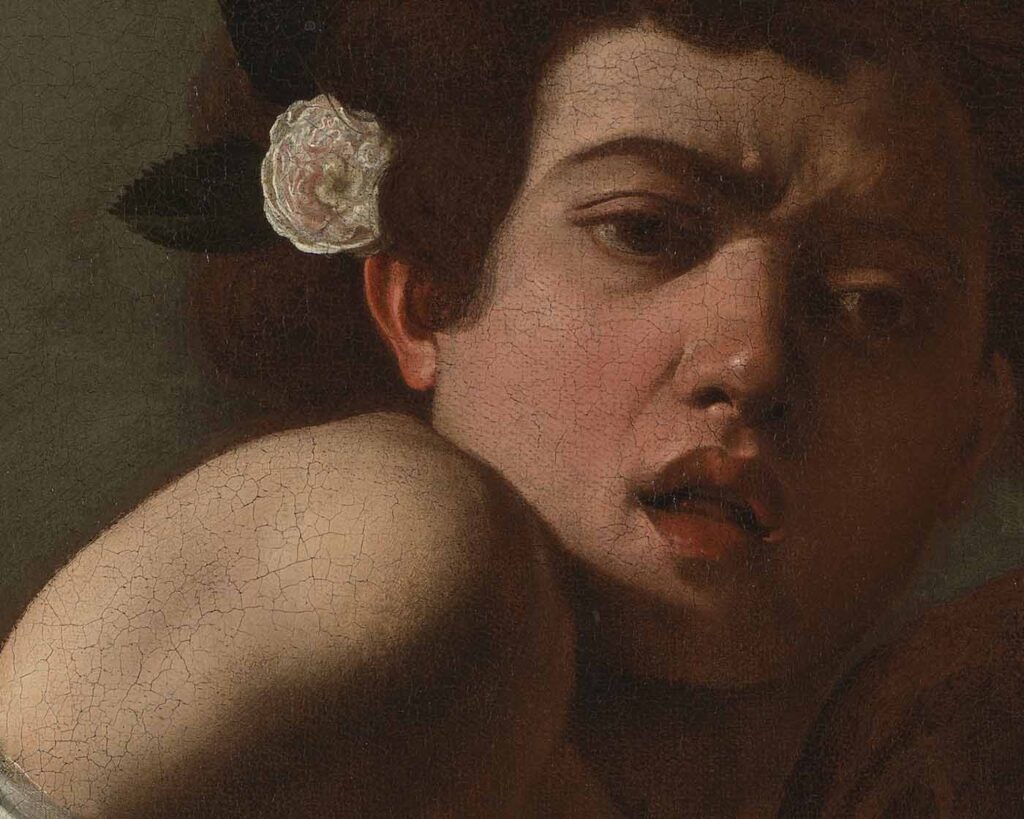
Oil paint transparency changes as paint ages — and in at least one Caravaggio, that change has quietly altered the picture. A National Gallery cross-section study of three of his London paintings, the same research behind last week’s piece on his colored grounds, documents a specific optical relationship: how a thin, dark passage lets a warm ground show through as a built-in mid-tone, and why that ground reads more strongly today than it did the day Caravaggio set his brush down. The mechanism is straightforward once it’s laid out, and it raises a genuinely useful question for anyone painting on a toned ground now: how much of what you build into a passage today will still look the same way in a hundred years?
Why This Paper Matters
Larry Keith’s 1998 study of the National Gallery’s three Caravaggios already anchored a companion piece on this site, about the ground layer itself — what it was made of, how it changed across his career, and the ways Caravaggio let it show through as a built-in mid-tone. That earlier piece touched the optical mechanism in a single paragraph and moved on. It’s worth slowing down on, because it’s the more portable of the two findings.
A specific ground recipe from 1600s Rome is interesting history. The physics of when paint hides what’s underneath it, and when it doesn’t, is something every oil painter runs into whether or not they’ve ever heard the phrase “refractive index.” Keith’s paper documents that physics with unusual clarity in one specific passage, on a ground Caravaggio used, Keith suggests, more thoroughly than was typical elsewhere in Italy at the time, drawing on a longer Lombard tradition of dark grounds (Keith 1998, 38). Keith frames that comparison as a plausible reading of the evidence, not a settled point, and this piece will keep the same hedge.
It’s also worth being clear about scope. Keith’s own conclusion is that Caravaggio’s technique, including his dramatic lighting, rests on handling, live-model practice, and compositional planning as much as on any single optical trick — a companion piece on this site surveys that broader ground. What follows is a focused look at one thread within it: oil paint transparency, and how it behaves differently over time than opacity does.
The Core Finding in One Sentence
Two things are demonstrated here, and they’re narrower than they might first sound. A thin, dark paint layer over a lighter, warm ground can let that ground read through as a built-in mid-tone (Keith 1998, 38). And oil paint’s own refractive index rises as it ages, which can make that ground read through more strongly today than it did when the paint was fresh (Keith 1998, 38).
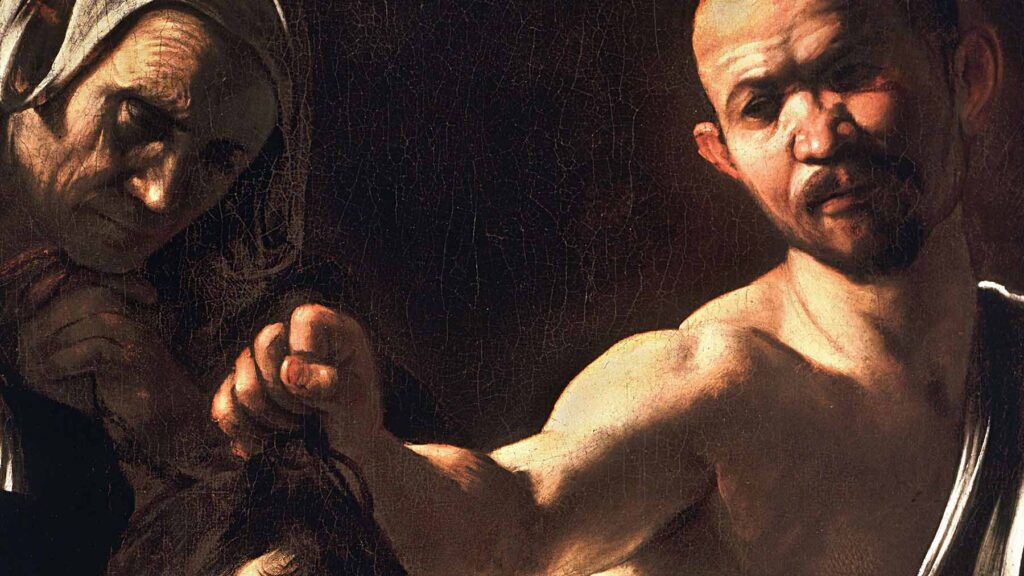
Keith’s paper does not claim the reverse — that thick, pale paint is somehow immune to aging or wear. It isn’t, and the same paper shows why: in Salome, pale underlying brushwork marking the old woman’s hands has become visible again specifically because the paint above it has grown both more transparent and more worn (Keith 1998, 45–46). Caravaggio demonstrably used placement, thickness, and paint color together to control how much of the ground showed through in a given passage. Whether he anticipated how that balance would keep shifting for the next four centuries is a separate question, and not one this paper answers.


Responses