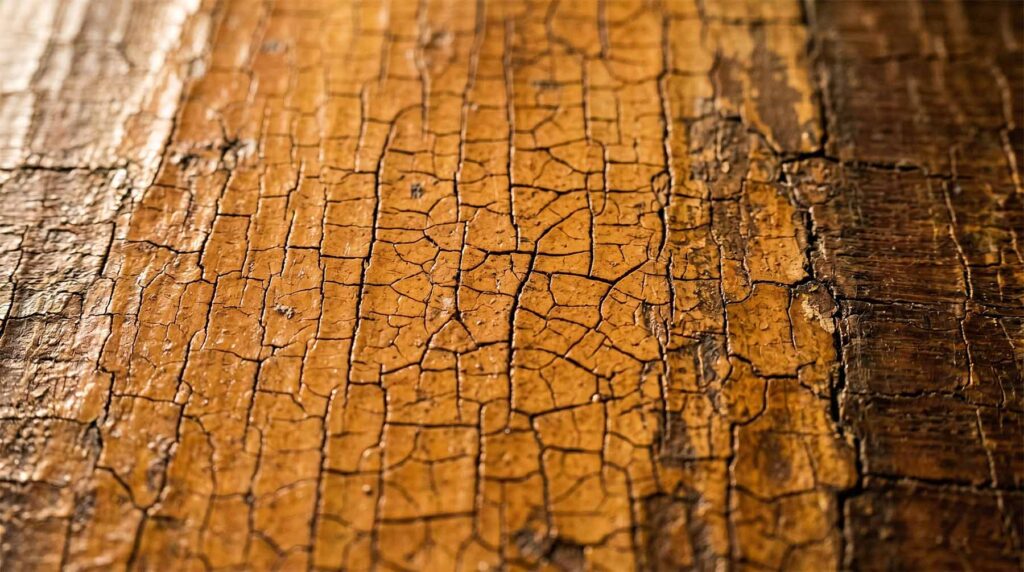
We examine drying oil yellowing. It always has, and no formulation on the market today has eliminated the problem. What painters often treat as a settled question — which oil yellows least? — turns out to have a less familiar answer than conventional wisdom suggests. And the question most artists rarely ask — does how and where I store my paintings matter as much as which oil I used? — has an answer that may well change day-to-day decisions about painting care.
A 2020 study in npj Heritage Science by L.K. Cairns and P.B.C. Forbes at the University of Pretoria compared four commercially available drying oils under controlled curing and aging conditions, tracking drying oil yellowing via fluorescence and UV-visible spectroscopy. Their findings confirm what stand oil users have long sensed, overturn assumptions about water-miscible linseed oil, and demonstrate clearly that the visible discoloration of an oil painting is not a reliable indicator of its age. Supporting evidence from a 1999 solution-phase study by Z. Chen and P.E. Hoggard on metal complexes and linseed oil yellowing adds mechanism-level context to the drier and pigment questions.
Both papers have significant limitations in their direct applicability to studio practice — limitations discussed throughout this article and collected in a dedicated section below. With those limits in view, the findings still provide useful directional guidance for oil selection, storage, and studio housekeeping.
What the Researchers Actually Did
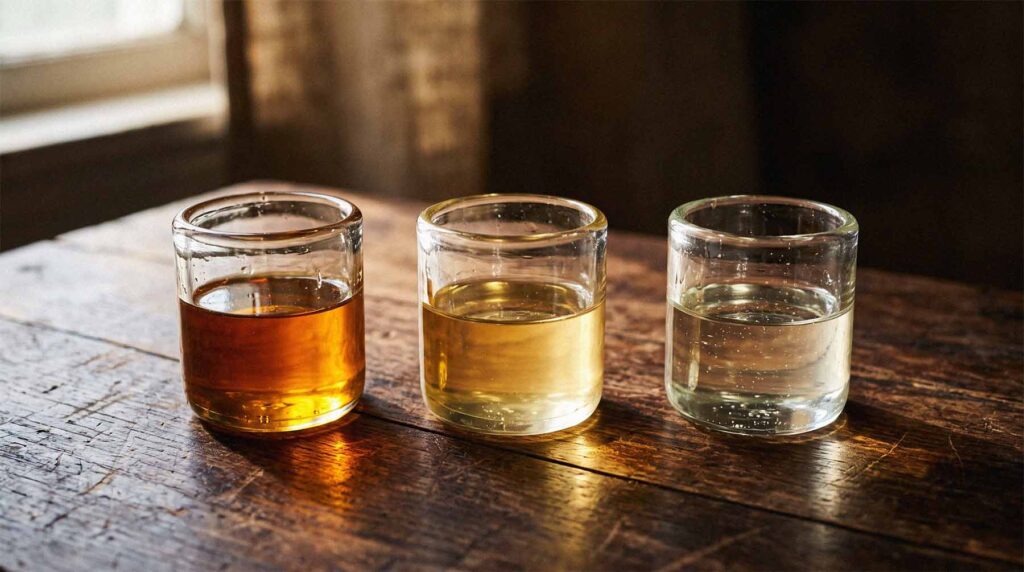
Cairns and Forbes prepared solid film samples of four Winsor & Newton drying oils — linseed (LO), water-miscible linseed (WLO), stand oil (SO), and poppy seed oil (PO) — by painting them onto glass microscope slides. Films were cured naturally at ambient temperature and humidity (20 ± 5 °C, 50 ± 20% RH) in a dark drawer for two years. A separate set of samples was then subjected to artificial aging: elevated temperature (80 °C), UV-C irradiation at 254 nm, and a sealed ammonia vapor chamber (Cairns & Forbes, 2020, p. 2).
Yellowing was tracked using fluorescence spectroscopy. Cured oil films fluoresce in the blue range when excited at 365 nm. As an oil yellows, the fluorescence emission shifts toward longer wavelengths — from blue (around 460 nm) through green (500–510 nm) toward yellow-green (550–570 nm). This bathochromic shift correlates with visible color change in these unpigmented film samples and gave the researchers a quantitative, reproducible measure of discoloration. They also recorded UV-visible absorption spectra on liquid and cured samples and separated optically active fractions by HPLC (Cairns & Forbes, 2020, pp. 3–5).
An important boundary on these results: the study tested unpigmented oil films only. How these oils behave in actual paint layers — where pigment chemistry, pigment volume concentration, oil absorption, film thickness, ground absorbency, and metal ion availability all interact with the binder — was not tested. The findings provide directional evidence about the oils themselves. They do not directly predict how a pigmented paint system will behave.


Responses