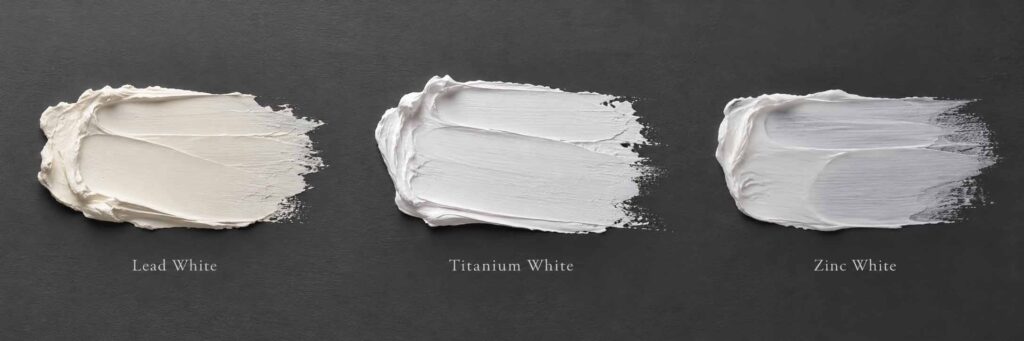
The choice between lead white, titanium white, and zinc white affects much more than the appearance of an oil painting. These pigments differ in opacity, tinting strength, drying behavior, and how they interact with the oil binder. Research also shows that they can influence how strong, brittle, or resistant to cracking a paint film becomes over time.
For artists comparing lead white vs. titanium white vs. zinc white, the most important distinction is not simply which white is brightest or easiest to handle. It is how each pigment behaves within a particular paint formulation and what happens as that paint ages.
Lead white (PW1), titanium white (PW6), and zinc white (PW4) introduce different chemical and physical characteristics into oil paint. Their effects also depend on the drying oil, pigment concentration, extenders, driers, and other additives.
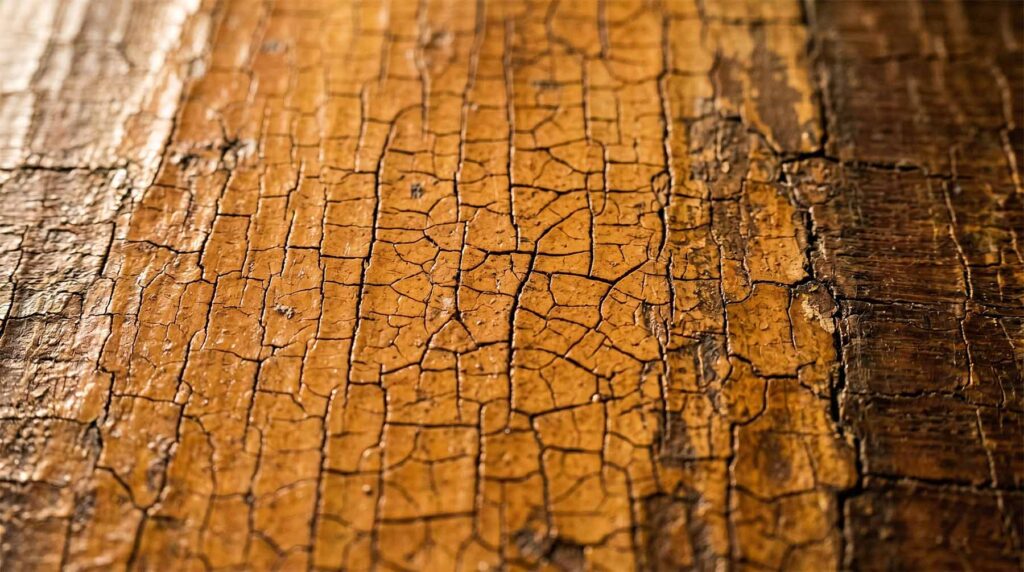
Long-term investigations of naturally aged oil paints have revealed substantial differences in tensile strength, stiffness, extensibility, fracture toughness, and shrinkage. Conservation studies have also documented deterioration associated with metal soaps, including zinc-carboxylate formation and separation of paint layers.
These findings challenge familiar assumptions. Faster drying does not necessarily produce a stronger film. Greater hardness does not guarantee durability. And combining two pigments does not necessarily produce a paint with intermediate mechanical properties.
This article examines what scientific research establishes about the three principal whites, the limitations of that evidence, and the implications for contemporary oil painters.


Responses