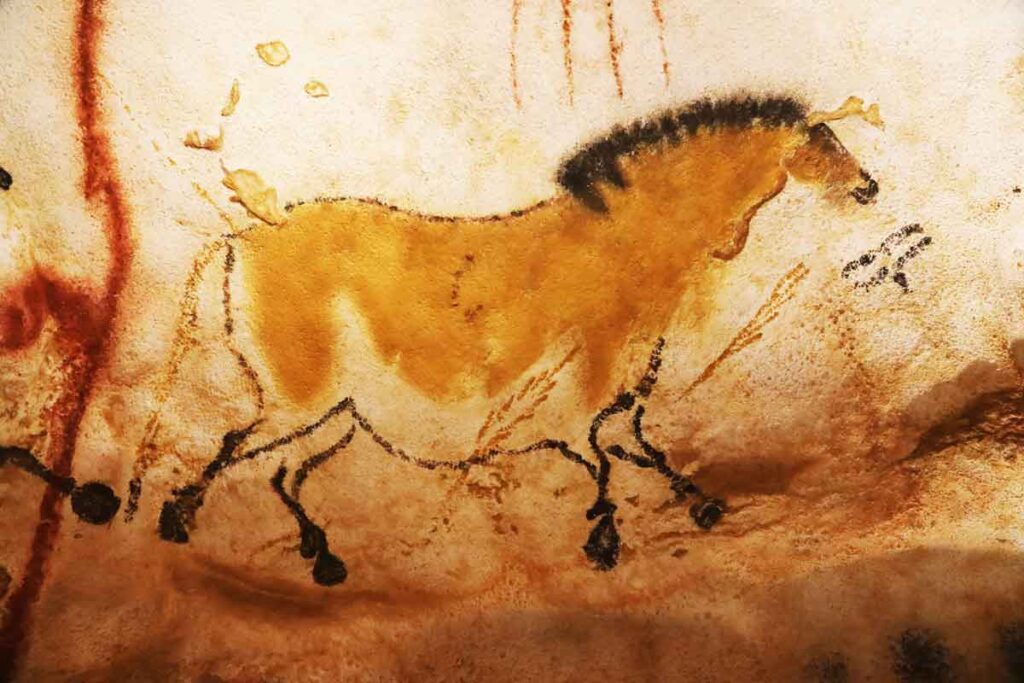
Yellow ochre pigment has been used for centuries to create stunning works of art. Its warm and earthy tones make it a favorite among painters from the ancient Egyptians to the modern day. In this article, we explore the fascinating history and properties of yellow ocher, from its origin as a natural earth pigment to its use in contemporary art.
Ocher is a type of natural earth pigment, a group that includes yellow ocher, red ocher, purple ocher, sienna, and umber. It is composed of iron oxide, clay, and silica. The amount of each component in the pigment affects its color and properties. Yellow ocher is the most commonly used pigment of all the ochers, and it is an iron oxide hydroxide (α-FeOOH), also known as gold ocher.
Yellow ocher is derived from natural minerals found in many locations of the earth. Limonite is the primary component of yellow ocher pigments. Before modern mineral analysis, the name “limonite” was given to many yellowish to yellowish brown iron oxides produced during the weathering of iron-bearing rocks. Limonite often contains significant amounts of iron oxide minerals such as goethite and hematite. Limonite does not meet the definition of a mineral. Instead, limonite is a mineraloid composed mainly of iron oxide hydroxide, often found in intimate associations with various iron minerals. The name limonite is currently used for unidentified hydroxides and oxides of iron, with no visible crystals and a yellow-brown streak. The most common mineral species of limonite is goethite, but it can also consist of varying proportions of lepidocrocite, hisingerite, pitticite, jarosite group species, maghemite, hematite, etc.
Goethite is the coloring substance of yellow ocher pigments, and hematite (sometimes with magnetite) is that of red ocher and other earth pigments. For example, umber (‘terre d’ombre’) contains manganese oxides and iron oxide. The shades of ocher pigments are related to the mineral content of goethite, hematite, and magnetite and secondary or accessory minerals, such as quartz, gypsum, anhydrite, calcite, calcite, dolomite, and alum (jarosite), and the iron and manganese substitution in the hematite structure.
Red ocher gets its reddish color from hematite, an anhydrous iron oxide. Purple ocher has the same chemical makeup as red ocher but appears to have a different hue due to various light diffraction properties connected with larger average particle size. Brown ocher, commonly known as goethite, is a partly hydrated iron oxide. Sienna contains both limonite and a small amount of manganese oxide, giving it a darker shade than ocher. Umber pigments have a higher amount of manganese, which gives them a dark brown color.
When heated, yellow ocher, sienna, and umber pigments are dehydrated, and some of the limonite transforms into hematite, giving them a reddish hue, referred to as red ocher, burnt sienna, and burnt umber. Modern ocher pigments are often manufactured using synthetic iron oxide identified as PY 42 (Pigment Yellow 42), while natural ocher pigments are identified as PY 43 (Pigment Yellow 43) in the Colour Index classification.






Venture into the expansive galaxy of EVE Online. Become a legend today. Trade alongside thousands of explorers worldwide. [url=https://www.eveonline.com/signup?invc=46758c20-63e3-4816-aa0e-f91cff26ade4]Start playing for free[/url]