Understanding historical painting techniques has opened new doors for modern artists looking to replicate traditional methods with precision and creativity. A recent study, New Insights into the Materials of Fifteenth- and Sixteenth-Century Netherlandish Paintings in the National Gallery, London by Marika Spring, offers a detailed exploration of the materials and techniques used by some of the most influential Netherlandish artists. The findings provide valuable guidance for contemporary artists seeking to incorporate historical methods into their own work.
This article reviews the key insights from the study, focusing on materials like powdered glass and zinc sulfate and the impact of pigments such as smalt, vivianite, and fluorite. By understanding how these materials were used historically, artists can make informed decisions about their own material choices and techniques.
Historical Painting Techniques: Additives for Paint Handling and Drying
Colorless Powdered Glass
One of the most significant findings of the study is the widespread use of colourless powdered glass as an additive in Netherlandish paintings. While powdered glass was first documented in Italian paintings in 2003, it has since been identified in fifteenth- and sixteenth-century paintings from across Europe.
Powdered glass was added to paints to improve drying time and handling, allowing artists to work more efficiently and layer paint more quickly. It was particularly effective when mixed with pigments known to dry slowly, such as red lakes and blacks. The glass acted as a siccative, or drying agent, helping to prevent tackiness and uneven drying.
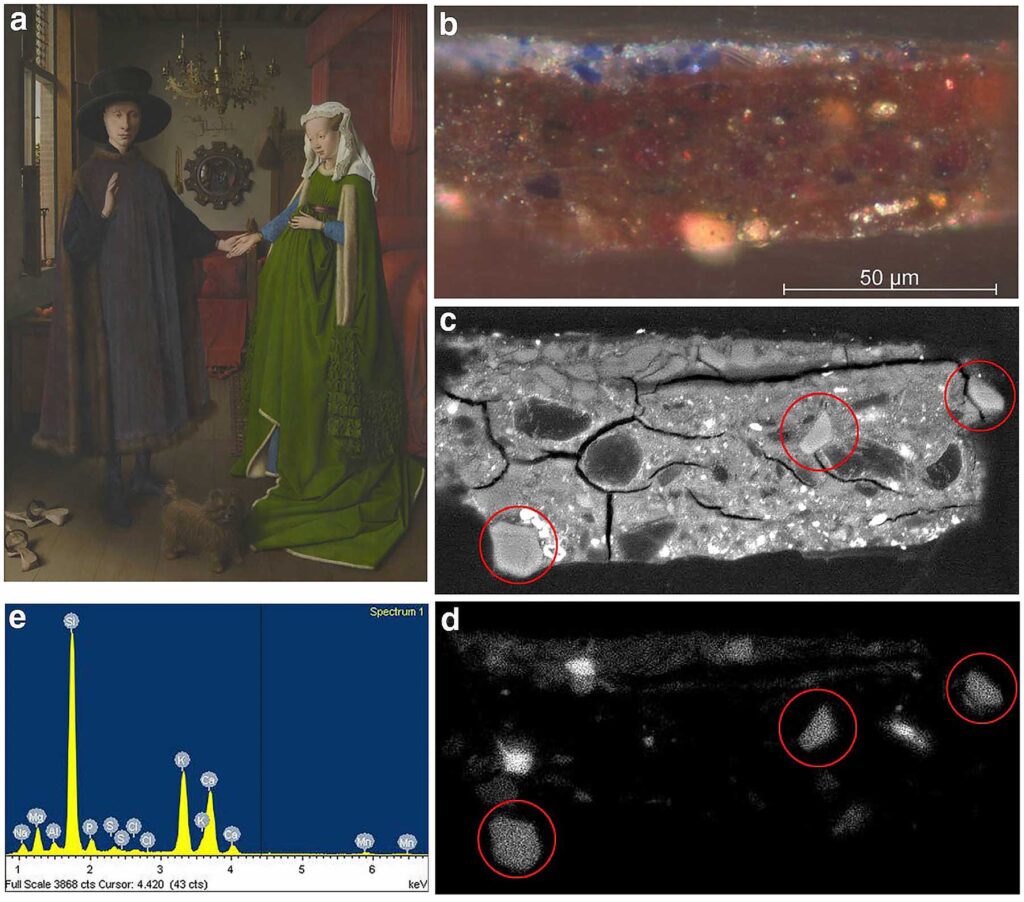
In Figure 1, the images provide a technical breakdown of Jan van Eyck’s use of materials in The Arnolfini Portrait (1434): (a) shows The Arnolfini Portrait, highlighting the area where the paint sample was taken. (b) is a cross-section of the plum-colored robe’s paint layer, revealing a thick layer of red lake, ultramarine, and colorless powdered glass beneath a thin ultramarine layer. The light appearance of the ultramarine layer indicates degradation and blanching. (c) is a backscattered electron SEM image of the paint cross-section, with the glass particles circled in red, confirming the deliberate inclusion of powdered glass. (d) is a silicon EDX map of the cross-section, where the glass particles (circled in red) are distinguishable from ultramarine, which also contains silicon. (e) is an EDX spectrum of one of the glass particles, showing the characteristic elements of the glass composition, further validating its presence as an intentional additive. This analysis demonstrates how Van Eyck’s sophisticated use of powdered glass enhanced the drying properties and optical effects of the paint, contributing to the lasting vibrancy and texture of the work.
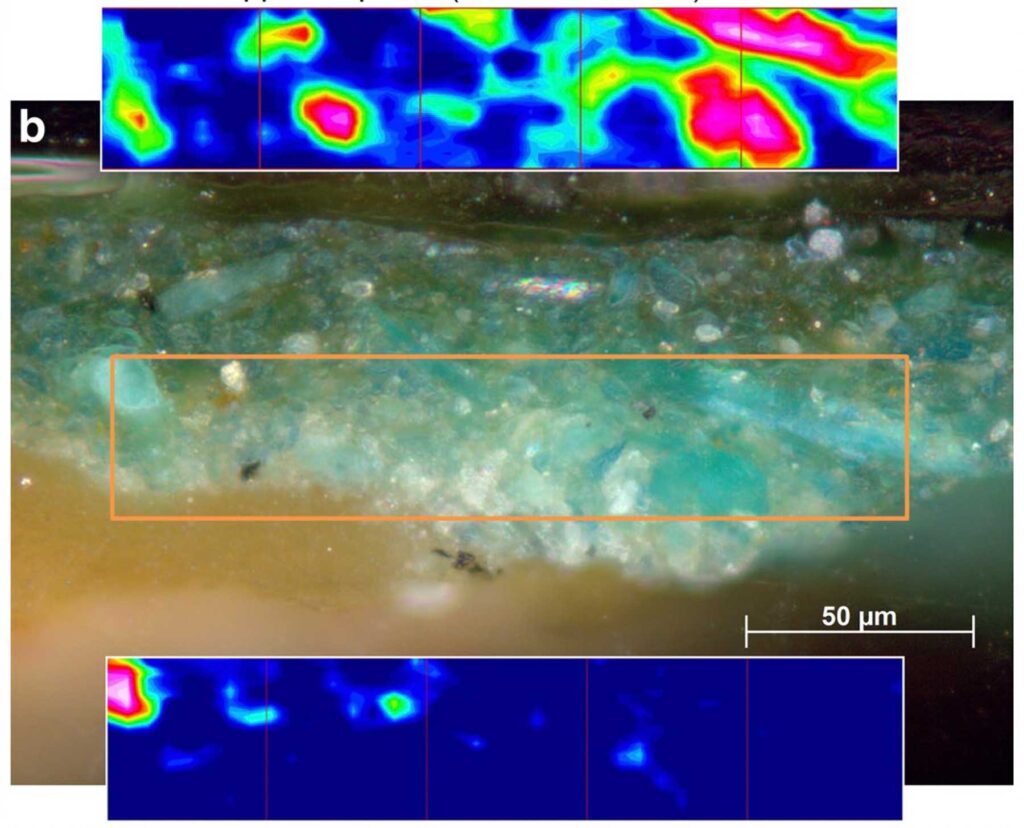
The study reveals that the type of glass used changed over time. Early glass was typically wood ash glass, but by the late fifteenth century, high lime–low alkali glass became more common. This shift may have been due to changes in glass manufacturing techniques or the increasing availability of imported Italian glass. High lime–low alkali glass affected drying time due to its chemical composition, particularly its high calcium content (20–25%) and lower potassium levels (3.5–5%). Dirk Bouts employed high lime–low alkali glass in Christ Crowned with Thorns (NG1083) around 1470, showing that the use of this type of glass began to appear in Netherlandish paintings after 1470. Albert Cornelis used colorless powdered glass in The Magdalen in a Landscape (1520) in combination with red lake and lead white to create subtle pink hues in the angel’s robe. The presence of manganese in the glass, which can act as a siccative, may have also played a role, though it remains uncertain whether the manganese was mobile enough to influence drying directly.
For contemporary artists, powdered glass offers a way to modify the texture and drying time of oil paints. Experimenting with different types of glass—wood ash or high lime—could produce subtle variations in paint consistency and optical depth.
Want to read the full article and unlock all resources? Choose an option below:
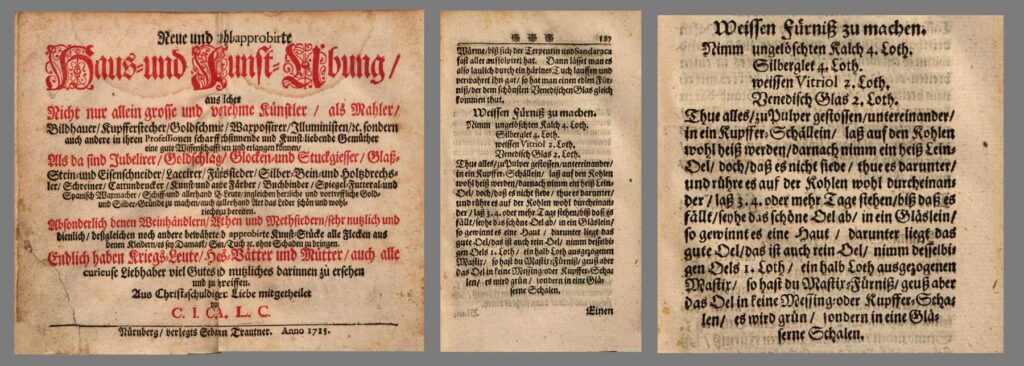
Explore historical oil painting siccatives, including lead oxide, alum, and Venetian glass. Learn how to prepare and use these traditional driers in painting.
What happens when your painting ground cracks? New research on gesso fracture toughness, acrylic primers, and zinc white reveals what your ground choice means for longevity.
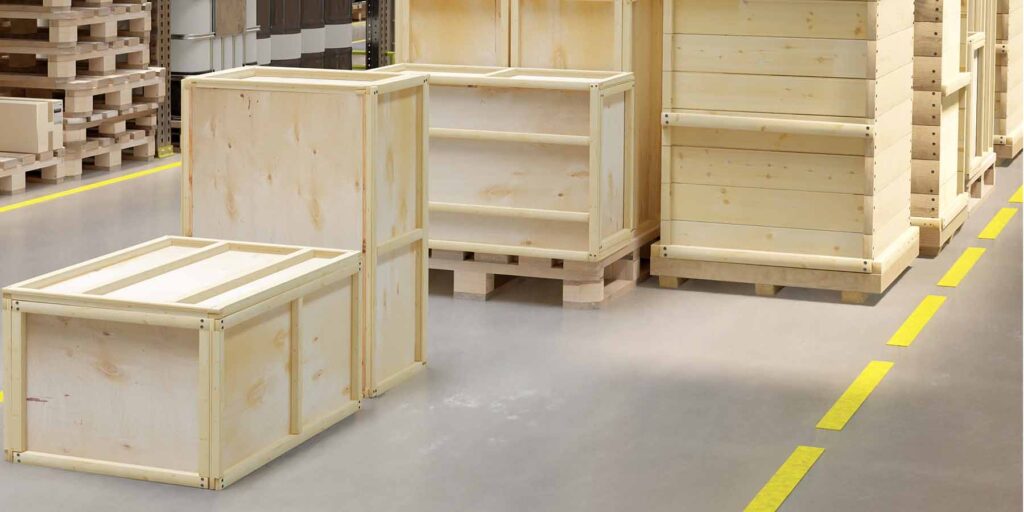
Painting on wood panels? Learn how plywood, MDO, and HDO boards serve as durable supports. This guide covers stability, surface prep, pros & cons, and best practices for oil, acrylic, and tempera.
Hi George, I thought that I was already a PBPs member. You sent me an email but I cannot get in. I will try the sign in above. Listen… I have been battling cancer for the last 6 months so anything complicated I cant handle right now. Thank you for your understanding. Peggy Nichols
Report
There was a problem reporting this post.
Block Member?
Please confirm you want to block this member.
You will no longer be able to:
See blocked member's posts
Mention this member in posts
Invite this member to groups
Message this member
Add this member as a connection
Please note:
This action will also remove this member from your connections and send a report to the site admin.
Please allow a few minutes for this process to complete.
Report
You have already reported this .
Subscribe to Our Newsletter
To begin reading the content, join thousands of artists enjoying our articles. Subscribe to receive updates on artists materials and practices.




Hi George, I thought that I was already a PBPs member. You sent me an email but I cannot get in. I will try the sign in above. Listen… I have been battling cancer for the last 6 months so anything complicated I cant handle right now. Thank you for your understanding. Peggy Nichols