Varnish vs Unvarnished: Understanding the Surface Choice
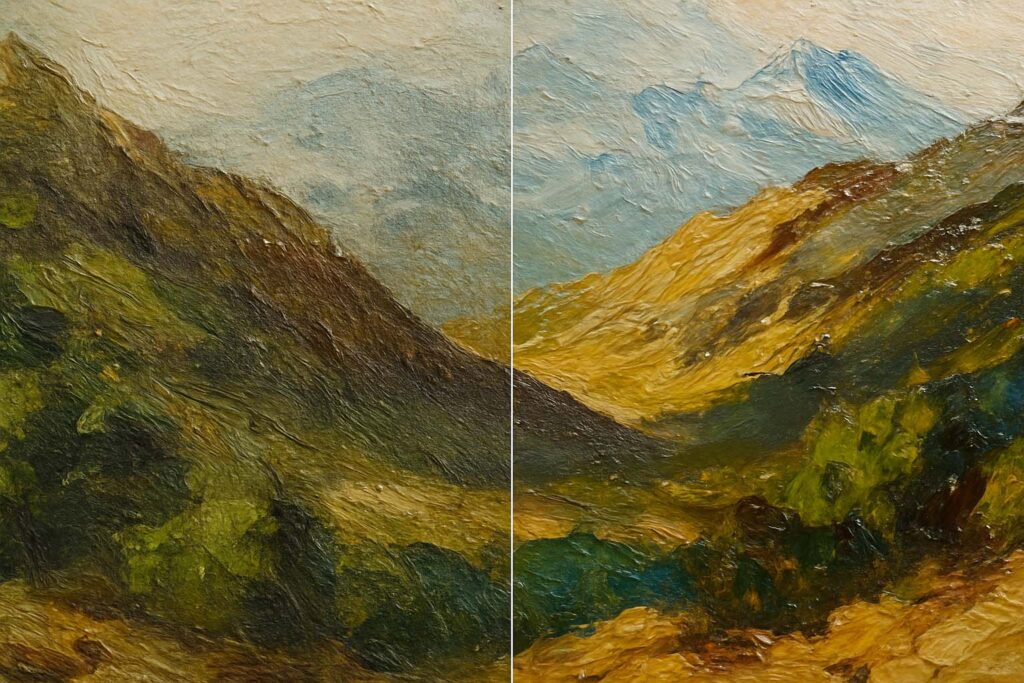
This article examines the crucial decision artists face when choosing between a varnish vs unvarnished surface. That choice carries both aesthetic implications and long-term conservation consequences. Varnish has traditionally served as a protective layer and an optical modifier while omitting it may lead to problems—particularly during cleaning and preservation. Recent conservation studies reveal how the misunderstanding or absence of varnish can complicate long-term maintenance, underscoring the importance of this decision for contemporary painters who work in historical styles or materials.
Two recent studies provide valuable insight. Barbara Dragan’s article on cleaning “unvarnished” paintings addresses the misidentification of thin or degraded varnish layers and the challenges they pose (Dragan, 2017). In contrast, a Yale University Art Gallery bulletin examines varnishing as an artistic decision, documenting how modern painters such as Monet, Hopper, and Braque navigated the issue of varnishing (Yale University Art Gallery, 2010).
Historical Perspectives on Varnish vs Unvarnished Paintings
In earlier painting traditions, especially during the Baroque period, varnish was an integral part. It unified surface gloss, increased chromatic depth, and provided a renewable layer. Artists expected future hands to maintain or renew this coating. However, by the late 19th century, many painters—particularly the Impressionists and early Modernists—began to reject varnish.
Claude Monet, for example, came to prefer an unvarnished surface. His painting The Artist’s Garden at Giverny retains its natural matte finish, with no final varnish layer applied. This allows the viewer to see variations in gloss among different brushstrokes, preserving the artist’s intent (Yale University Art Gallery, 2010, p. 123).
Pablo Picasso and Georges Braque were even more assertive. They insisted that their Cubist paintings never be varnished, opting instead to control surface gloss through their choice of painting materials and mediums alone (Yale University Art Gallery, 2010, p. 123).
Sunlight in a Cafeteria, Edward Hopper (American, 1882–1967), Oil on canvas, 40 3/16 × 60 1/8 in. (102.1 × 152.7 cm), Yale University Art Gallery
Edward Hopper took a different route. In his painting Sunlight in a Cafeteria (1958), Hopper selectively applied varnish to enhance areas of translucency, using a retouch varnish on the green walls and windows. This selective saturation changed the gloss locally, supporting specific visual effects (Yale University Art Gallery, 2010, pp. 124–125). With time, however, some of these varnished areas yellowed. The once-subtle effects became more visually dominant, obscuring Hopper’s intentions.
Want to read the full article and unlock all resources? Choose an option below:
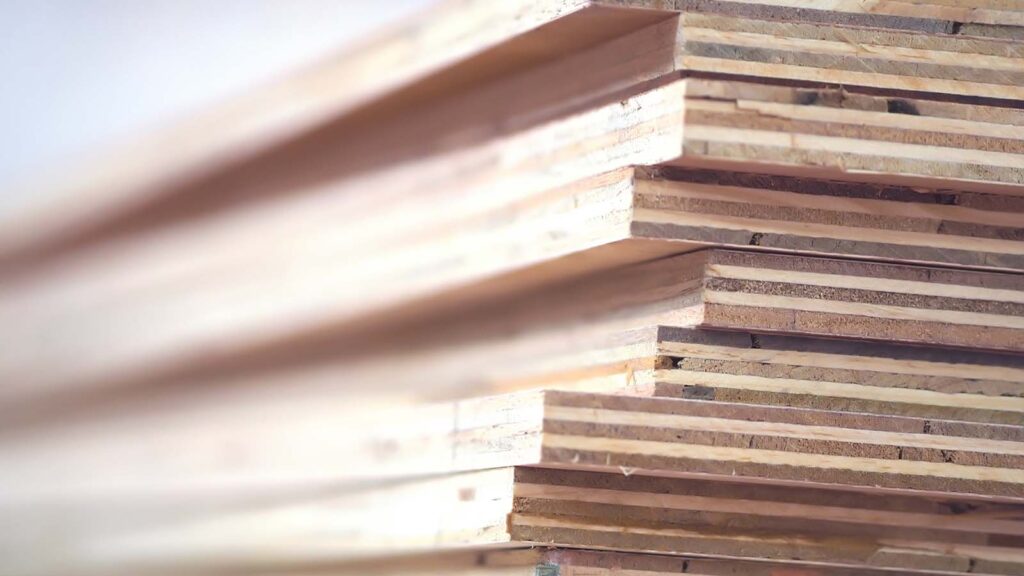
Painting on wood panels? Learn how plywood, MDO, and HDO boards serve as durable supports. This guide covers stability, surface prep, pros & cons, and best practices for oil, acrylic, and tempera.
Thank you George. As a conservator I deal with these issues all the time. I reiterate your call to artists to think carefully about their choices regarding varnish and yes, document those decisions! Without this information , we conservators must probe, test, analyze and ultimately make an esthetic decision that may or may not be in accordance with the artist’s original wishes.
Now a question: many artists are recommending using Oleogel to bring back gloss to sunken areas prior to repainting (oiling out). Does the silica component weaken the oil bond or cause it to behave in any other way than pure linseed oil would? Thanks.
Thank you for your comment. We do not recommend Oleigel as a final remedy for sunken passages, but as an intermediary solution between paint layers—never as a final layer in a painting. Fumed silica is inert and does not weaken bonds in oil, but it does not strengthen bonds as does lead white.
Embark into the epic realm of EVE Online. Find your fleet today. Conquer alongside millions of players worldwide. [url=https://www.eveonline.com/signup?invc=46758c20-63e3-4816-aa0e-f91cff26ade4]Join now[/url]
Report
There was a problem reporting this post.
Block Member?
Please confirm you want to block this member.
You will no longer be able to:
See blocked member's posts
Mention this member in posts
Invite this member to groups
Message this member
Add this member as a connection
Please note:
This action will also remove this member from your connections and send a report to the site admin.
Please allow a few minutes for this process to complete.
Report
You have already reported this .
Subscribe to Our Newsletter
To begin reading the content, join thousands of artists enjoying our articles. Subscribe to receive updates on artists materials and practices.






Thank you George. As a conservator I deal with these issues all the time. I reiterate your call to artists to think carefully about their choices regarding varnish and yes, document those decisions! Without this information , we conservators must probe, test, analyze and ultimately make an esthetic decision that may or may not be in accordance with the artist’s original wishes.
Now a question: many artists are recommending using Oleogel to bring back gloss to sunken areas prior to repainting (oiling out). Does the silica component weaken the oil bond or cause it to behave in any other way than pure linseed oil would? Thanks.
Thank you for your comment. We do not recommend Oleigel as a final remedy for sunken passages, but as an intermediary solution between paint layers—never as a final layer in a painting. Fumed silica is inert and does not weaken bonds in oil, but it does not strengthen bonds as does lead white.
Embark into the epic realm of EVE Online. Find your fleet today. Conquer alongside millions of players worldwide. [url=https://www.eveonline.com/signup?invc=46758c20-63e3-4816-aa0e-f91cff26ade4]Join now[/url]