Varnish vs Unvarnished: Understanding the Surface Choice
This article examines the crucial decision artists face when choosing between a varnish vs unvarnished surface. That choice carries both aesthetic implications and long-term conservation consequences. Varnish has traditionally served as a protective layer and an optical modifier while omitting it may lead to problems—particularly during cleaning and preservation. Recent conservation studies reveal how the misunderstanding or absence of varnish can complicate long-term maintenance, underscoring the importance of this decision for contemporary painters who work in historical styles or materials.
Two recent studies provide valuable insight. Barbara Dragan’s article on cleaning “unvarnished” paintings addresses the misidentification of thin or degraded varnish layers and the challenges they pose (Dragan, 2017). In contrast, a Yale University Art Gallery bulletin examines varnishing as an artistic decision, documenting how modern painters such as Monet, Hopper, and Braque navigated the issue of varnishing (Yale University Art Gallery, 2010).
Historical Perspectives on Varnish vs Unvarnished Paintings
In earlier painting traditions, especially during the Baroque period, varnish was an integral part. It unified surface gloss, increased chromatic depth, and provided a renewable layer. Artists expected future hands to maintain or renew this coating. However, by the late 19th century, many painters—particularly the Impressionists and early Modernists—began to reject varnish.
Claude Monet, for example, came to prefer an unvarnished surface. His painting The Artist’s Garden at Giverny retains its natural matte finish, with no final varnish layer applied. This allows the viewer to see variations in gloss among different brushstrokes, preserving the artist’s intent (Yale University Art Gallery, 2010, p. 123).
Pablo Picasso and Georges Braque were even more assertive. They insisted that their Cubist paintings never be varnished, opting instead to control surface gloss through their choice of painting materials and mediums alone (Yale University Art Gallery, 2010, p. 123).
Sunlight in a Cafeteria, Edward Hopper (American, 1882–1967), Oil on canvas, 40 3/16 × 60 1/8 in. (102.1 × 152.7 cm), Yale University Art Gallery
Edward Hopper took a different route. In his painting Sunlight in a Cafeteria (1958), Hopper selectively applied varnish to enhance areas of translucency, using a retouch varnish on the green walls and windows. This selective saturation changed the gloss locally, supporting specific visual effects (Yale University Art Gallery, 2010, pp. 124–125). With time, however, some of these varnished areas yellowed. The once-subtle effects became more visually dominant, obscuring Hopper’s intentions.
Want to read the full article and unlock all resources? Choose an option below:
Painting on wood panels? Learn how plywood, MDO, and HDO boards serve as durable supports. This guide covers stability, surface prep, pros & cons, and best practices for oil, acrylic, and tempera.
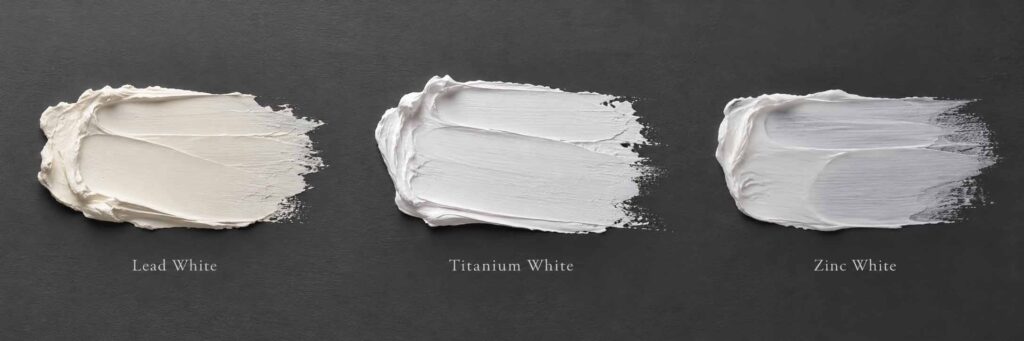
The white you choose affects more than the colors on your palette—it can influence how your painting ages for decades. Lead white, titanium white, and zinc white offer distinct advantages in opacity, tinting strength, and handling, but their long-term behavior differs. Discover what scientific research reveals about these pigments and how to make informed choices for your painting techniques and lasting durability.
Munsell notation for painters explained: what hue, value, and chroma actually promise, how Richard Murdock and Graydon Parrish mix toward it, and where it falls short.
Thank you George. As a conservator I deal with these issues all the time. I reiterate your call to artists to think carefully about their choices regarding varnish and yes, document those decisions! Without this information , we conservators must probe, test, analyze and ultimately make an esthetic decision that may or may not be in accordance with the artist’s original wishes.
Now a question: many artists are recommending using Oleogel to bring back gloss to sunken areas prior to repainting (oiling out). Does the silica component weaken the oil bond or cause it to behave in any other way than pure linseed oil would? Thanks.
Thank you for your comment. We do not recommend Oleigel as a final remedy for sunken passages, but as an intermediary solution between paint layers—never as a final layer in a painting. Fumed silica is inert and does not weaken bonds in oil, but it does not strengthen bonds as does lead white.
Report
There was a problem reporting this post.
Block Member?
Please confirm you want to block this member.
You will no longer be able to:
See blocked member's posts
Mention this member in posts
Invite this member to groups
Message this member
Add this member as a connection
Please note:
This action will also remove this member from your connections and send a report to the site admin.
Please allow a few minutes for this process to complete.
Report
You have already reported this .
Cookie Consent
We use cookies to improve your experience on our site. By using our site, you consent to cookies.
Cookie Preferences
Manage your cookie preferences below:
Essential cookies enable basic functions and are necessary for the proper function of the website.
Name
Description
Duration
Cookie Preferences
This cookie is used to store the user's cookie consent preferences.
30 days
These cookies are needed for adding comments on this website.
Name
Description
Duration
comment_author
Used to track the user across multiple sessions.
Session
comment_author_email
Used to track the user across multiple sessions.
Session
comment_author_url
Used to track the user across multiple sessions.
Session
WooCommerce is a customizable eCommerce platform for building online stores using WordPress.
Name
Description
Duration
woocommerce_snooze_suggestions__
Allows dashboard users to dismiss Marketplace suggestions, if enabled.
2 days
woocommerce_dismissed_suggestions__
Count of suggestion dismissals, if enabled.
1 month
woocommerce_cart_hash
Helps WooCommerce determine when cart contents/data changes.
session
woocommerce_items_in_cart
Helps WooCommerce determine when cart contents/data changes.
session
wp_woocommerce_session_
Contains a unique code for each customer so that it knows where to find the cart data in the database for each customer.
2 days
woocommerce_recently_viewed
Powers the Recent Viewed Products widget
session
store_notice
Allows customers to dismiss the Store Notice.
session
Statistics cookies collect information anonymously. This information helps us understand how visitors use our website.
Facebook Pixel is a web analytics service that tracks and reports website traffic.
ID used to identify users for 24 hours after last activity
24 hours
_gat
Used to monitor number of Google Analytics server requests when using Google Tag Manager
1 minute
__utmc
Used only with old Urchin versions of Google Analytics and not with GA.js. Was used to distinguish between new sessions and visits at the end of a session.
End of session (browser)
__utmz
Contains information about the traffic source or campaign that directed user to the website. The cookie is set when the GA.js javascript is loaded and updated when data is sent to the Google Anaytics server
6 months after last activity
__utmv
Contains custom information set by the web developer via the _setCustomVar method in Google Analytics. This cookie is updated every time new data is sent to the Google Analytics server.
2 years after last activity
__utmx
Used to determine whether a user is included in an A / B or Multivariate test.
18 months
_ga
ID used to identify users
2 years
_gali
Used by Google Analytics to determine which links on a page are being clicked
30 seconds
_ga_
ID used to identify users
2 years
_gac_
Contains information related to marketing campaigns of the user. These are shared with Google AdWords / Google Ads when the Google Ads and Google Analytics accounts are linked together.
90 days
__utma
ID used to identify users and sessions
2 years after last activity
__utmt
Used to monitor number of Google Analytics server requests
10 minutes
__utmb
Used to distinguish new sessions and visits. This cookie is set when the GA.js javascript library is loaded and there is no existing __utmb cookie. The cookie is updated every time data is sent to the Google Analytics server.
30 minutes after last activity
Marketing cookies are used to follow visitors to websites. The intention is to show ads that are relevant and engaging to the individual user.
Name
Description
Duration
affwp_ref
Stores the referring affiliate ID for commission attribution.
30 days
affwp_ref_visit_id
Stores the visit ID linked to the referring affiliate.
30 days
affwp_campaign
Stores the affiliate campaign name for tracking purposes.






Thank you George. As a conservator I deal with these issues all the time. I reiterate your call to artists to think carefully about their choices regarding varnish and yes, document those decisions! Without this information , we conservators must probe, test, analyze and ultimately make an esthetic decision that may or may not be in accordance with the artist’s original wishes.
Now a question: many artists are recommending using Oleogel to bring back gloss to sunken areas prior to repainting (oiling out). Does the silica component weaken the oil bond or cause it to behave in any other way than pure linseed oil would? Thanks.
Thank you for your comment. We do not recommend Oleigel as a final remedy for sunken passages, but as an intermediary solution between paint layers—never as a final layer in a painting. Fumed silica is inert and does not weaken bonds in oil, but it does not strengthen bonds as does lead white.