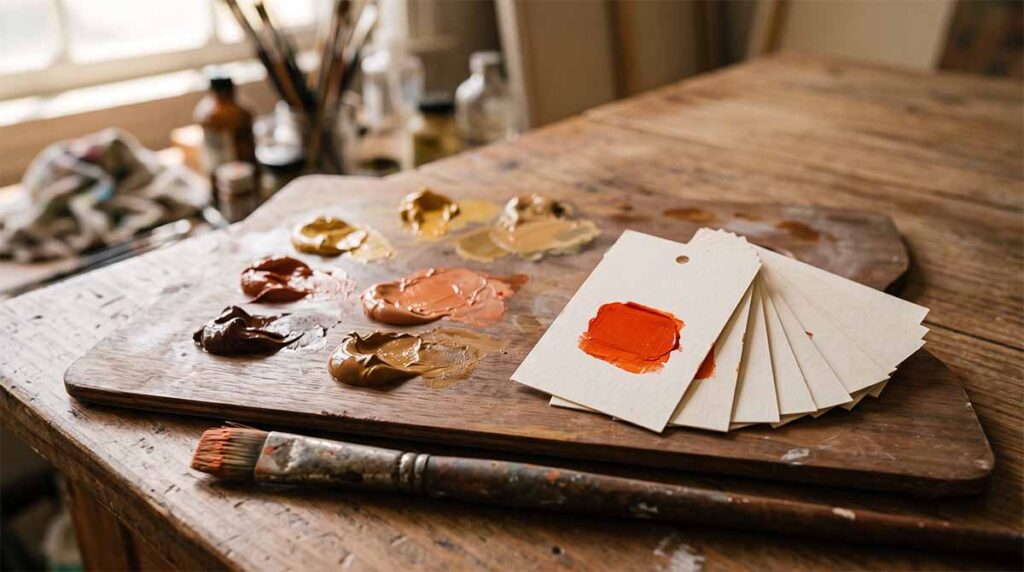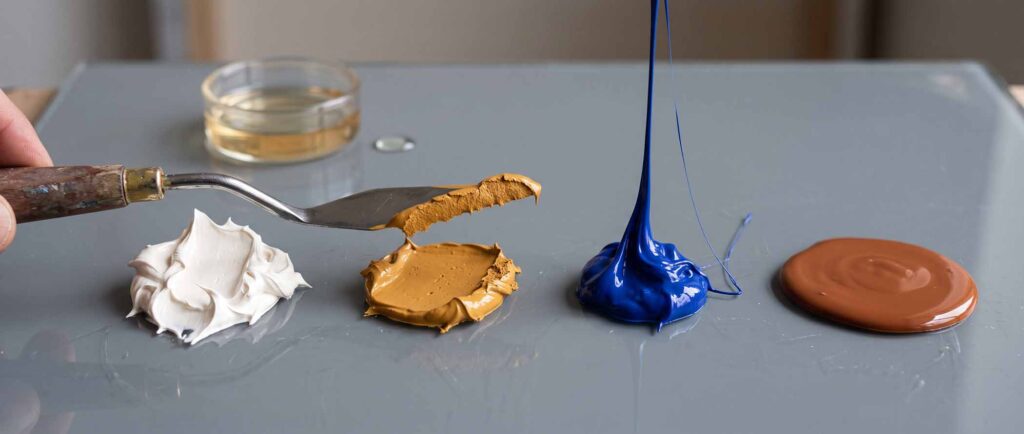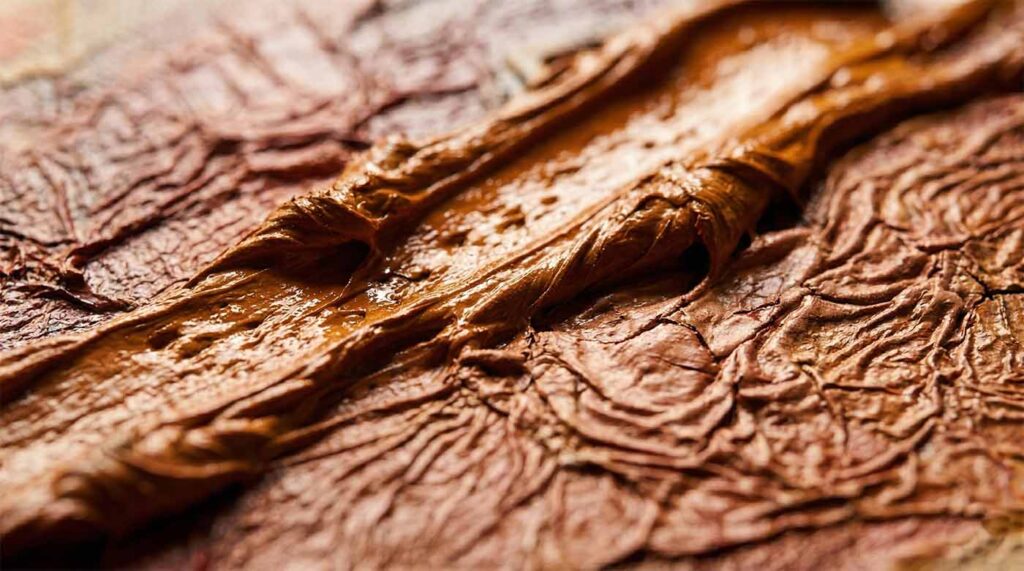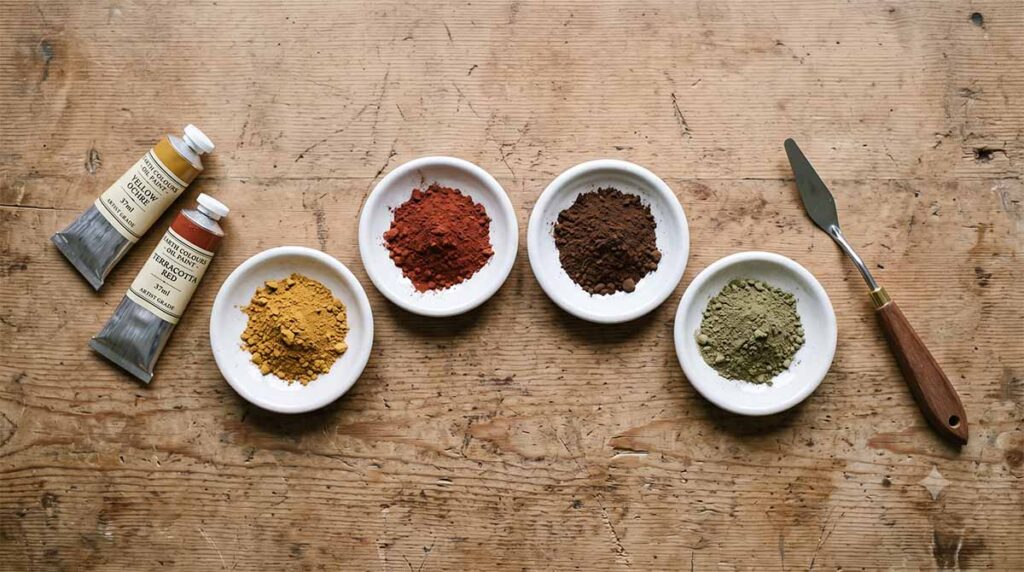
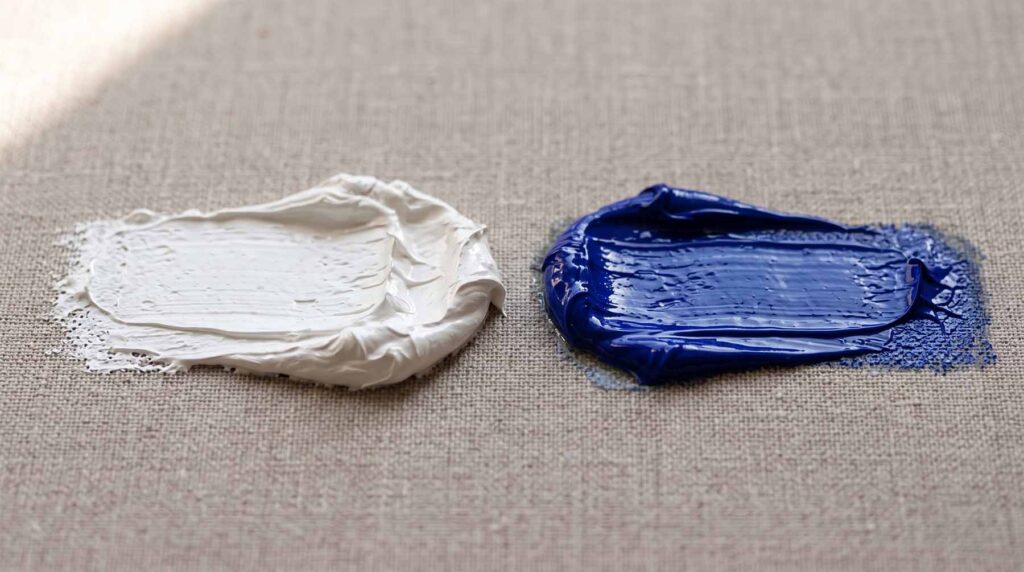
Lead white and ultramarine oil paint illustrating pigment effects on oil paint curing.

Oil Paint Curing: How Pigments Change Cross-Linking, Oxidation, and Drying

Oil paint curing does not proceed uniformly from one color to another. Painters know from experience that lead-containing whites may set relatively quickly, while some blues, blacks, and organic colors can remain workable much longer. It is tempting to treat those differences as a matter of waiting time alone.

The chemistry is more consequential than that.

A 2021 study by Silvia Pizzimenti and colleagues followed model oil paints for as long as two years to examine what happens after oxygen begins reacting with the oil binder. Their central finding is that oil paint curing depends on the pigment–oil combination: pigment and oil together influence not only how quickly paint dries, but also the balance between two competing processes, formation of a cross-linked polymer network and oxidative degradation of that network.

For artists, this distinction matters because a paint film can become dry to the touch without being chemically mature. More importantly, two paints that both become “dry” can arrive there through substantially different reaction pathways.

The study does not establish a universal ranking of pigments or oils. It does, however, demonstrate why the pigment cannot be treated as an inert colored powder floating in an otherwise independent oil binder. In oil paint curing, pigment and binder form a chemically interactive system.

What the Researchers Studied

To investigate oil paint curing, the researchers prepared four model paints using two oils and two pigments:

Want to read the full article and unlock all resources? Choose an option below:

Already a member? Log in to continue Start 14-Day Trial ($1)
Cancel anytime · 30-day money-back guarantee
Related Articles

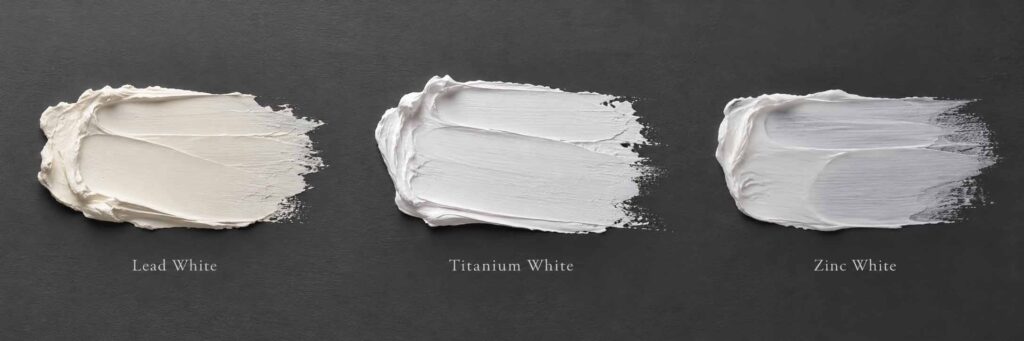
Lead White vs. Titanium White vs. Zinc White: How They Affect Oil Paint Durability

The white you choose affects more than the colors on your palette—it can influence how your painting ages for decades. Lead white, titanium white, and zinc white offer distinct advantages in opacity, tinting strength, and handling, but their long-term behavior differs. Discover what scientific research reveals about these pigments and how to make informed choices for your painting techniques and lasting durability.

Responses

Subscribe to Our Newsletter

To begin reading the content, join thousands of artists enjoying our articles. Subscribe to receive updates on artists materials and practices.

Or Join as Member for More Benefits