The harmony between pigment and binder not only frames the physical appearance of the artwork but fundamentally influences its reflective characteristics. A meticulous examination of how paint layer thickness and binder amount affect the reflectance of painted surfaces reveals intricate details that can dramatically impact the final visual effect. This exploration, grounded in recent research, sheds light on these nuanced interactions, offering artists profound insights to refine their craft.
The Significance of Paint Thickness and Binder Volume in Mastering Oil Painting Techniques
Historically, the roughness of paint, pigment impurities, and the texture of minerals were considered primary factors affecting the reflectance of painted surfaces. Yet, recent studies have highlighted the critical role of paint layer thickness and the volume of binder used. These elements, often overlooked, significantly influence the distribution of pigments and their interaction with the oil binder within the paint system. This interaction can lead to unexpected visual effects due to changes in reflectance, underscoring the importance for artists in carefully considering their paint’s composition.
Delving into the Paint System: A Closer Look at Pigment and Binder Distribution
The intricate dance between pigment particles and the oil binder dictates the artwork’s visual appearance. The distribution of these components within the paint layer plays a pivotal role in determining the painting’s reflectance. Accumulation of oil on the surface, for instance, can decrease reflectance, altering the intended visual outcome. This phenomenon highlights the need for artists to meticulously manage the balance between pigment and binder to achieve the desired effect.
Paint Layer Experimentation
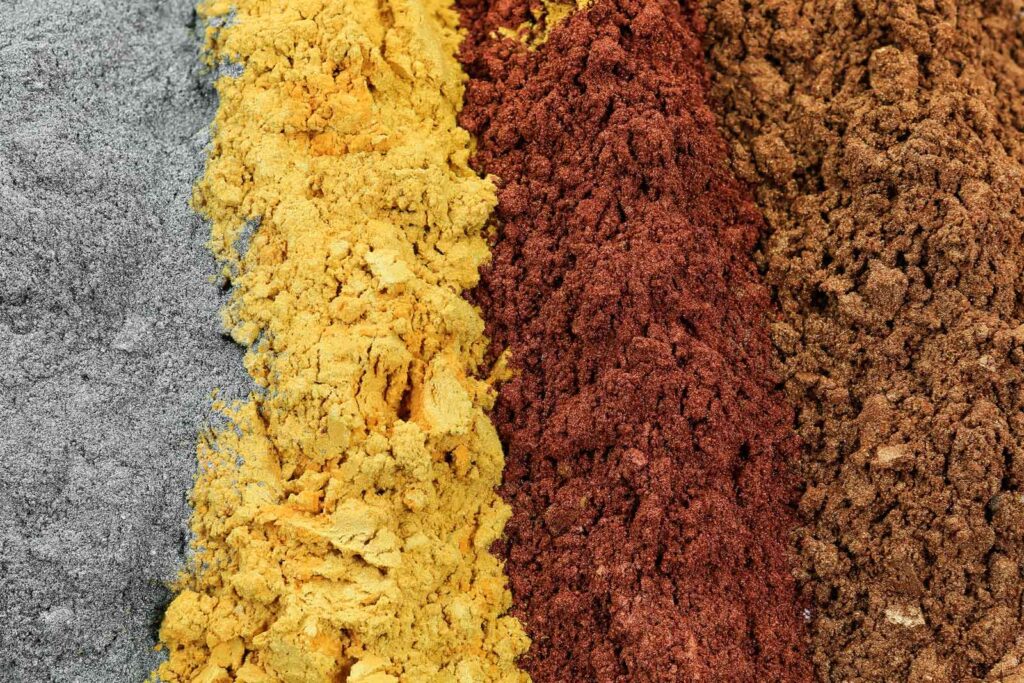
In the study, the researchers created mockups using five different mineral pigments mixed with linseed oil. These pigments were chosen for their varying colors and particle sizes, providing a broad spectrum of textures and effects. The pigments included:
- Lead White: Finely ground with particles smaller than 45 micrometers, leading to smoother paint layers.
- Orpiment: With larger particles up to 175 micrometers, resulting in thicker, more textured layers.
- Cinnabar: Very fine, with particles under 20 micrometers.
- Azurite: Medium-coarse, with particles up to 120 micrometers
- Malachite: Medium-coarse, with particles up to 120 micrometers, but also showing a wide range of particle sizes, adding to the texture variability.
The study found that the thickness of the paint layers varied depending on the pigment used. Coarser pigments like Orpiment, Azurite, and Malachite produced thicker layers, while finer pigments like Lead White and Cinnabar tended towards thinner applications. This suggests that the texture of the pigment itself can influence the overall thickness and texture of the paint on the canvas.
Reflectance, or how much light is reflected off the painting, didn’t consistently correlate with the number of layers applied across all pigments. Lead White paint mockups showed increased reflectance with more layers, likely due to the layers adding opacity. However, this was not the case for Orpiment, Cinnabar, Azurite, and Malachite mockups, where no clear pattern between layer thickness and reflectance was observed. This could be due to factors like the distribution of oil on the surface, which can darken the paint by increasing absorption of light.





Responses