For artists utilizing oil paints, understanding the impact of environmental factors, such as the effects of humidity on oil painting drying and curing, is crucial. The article “On the influence of relative humidity on the oxidation and hydrolysis of fresh and aged oil paints” delves into recent findings from the study and provides practical advice based on scientific insights.
The Impact of Humidity on Oil Paint Curing
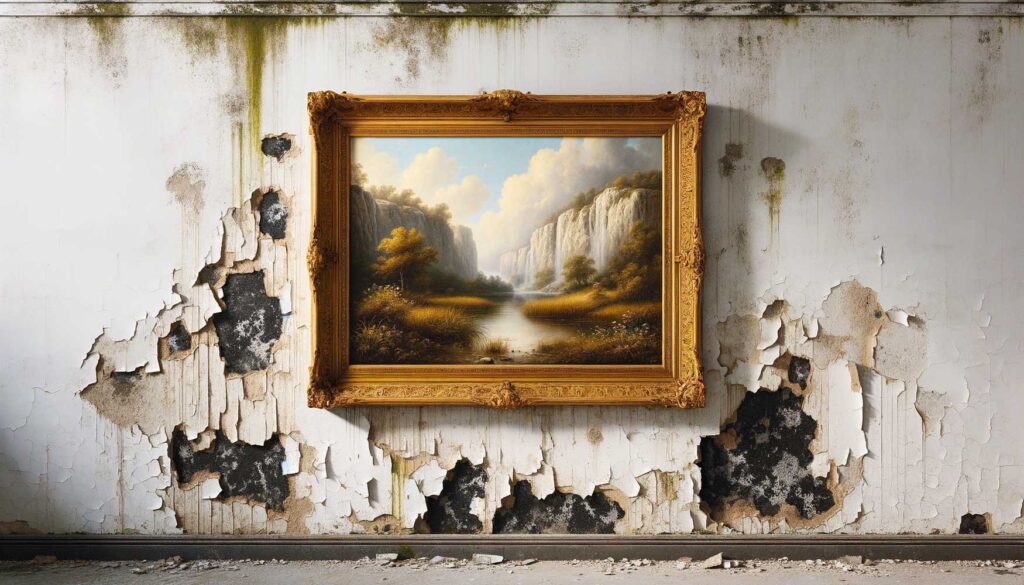
Relative humidity (RH) significantly influences the chemical properties of oil paints, affecting both the drying time and the stability of the paint over time. High humidity conditions, in particular, have been shown to slow down the cross-linking process of oil paints, resulting in layers that are less robust and more prone to solvent sensitivity. This sensitivity can pose challenges in the long-term preservation and maintenance of artworks.
Specific Findings Relevant to Artists
Reduced Cross-Linking at High Humidity:
The study indicates that oil paints exposed to high RH during curing and aging are less cross-linked. For artists, this means that paintings created or stored in humid conditions might be more susceptible to damage from cleaning and restorative processes.
Effects of Semi-Drying Oils:
Paints made with semi-drying oils like safflower oil are particularly affected by high humidity. These oils slow the drying rate and impact the long-term stability of the paint. Artists using these oils should consider environmental control or opt for more stable alternatives like linseed oil.
Additives and Modern Paint Formulations:
The presence of additives like castor wax and aluminum stearate in modern oil paints influences their response to humidity. For example, the study found that these additives could contribute to variations in hydrolysis and oxidation rates, which in turn affect the paint’s durability.
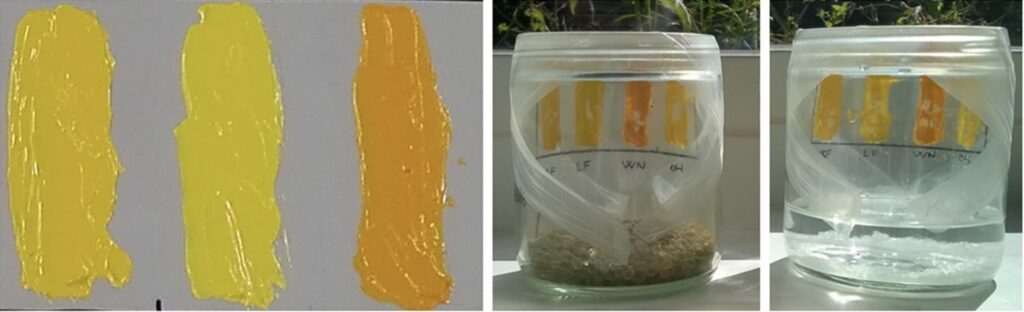
Cadmium yellow oil paint films and paint samples in dry and wet environments.
Practical Tips for Artists
Studio Environment: Maintain a controlled environment in your studio to minimize exposure to high humidity. Dehumidifiers or air conditioners can be used to stabilize the RH levels.
Choice of Materials: Be mindful of the types of oils and additives in the paints you use. Opt for materials known for their stability and lower sensitivity to humidity.
Protective Measures: Consider protective varnishes and appropriate framing techniques to shield your paintings from direct environmental exposure.
Conclusion
The influence of relative humidity on oil paint drying and aging is profound, particularly with modern formulations that include various additives and semi-drying oils. By understanding these effects and implementing protective measures, artists can better preserve the integrity and longevity of their works. This knowledge not only aids in creating durable art but also informs conservation strategies for existing works.
This article provides a foundation for artists to understand the scientific aspects behind oil paint behavior in different environmental conditions, encouraging informed decisions in both the creation and care of oil paintings.
Reference
Modugno, F., Di Gianvincenzo, F., Degano, I. et al. On the influence of relative humidity on the oxidation and hydrolysis of fresh and aged oil paints. Sci Rep9, 5533 (2019). https://doi.org/10.1038/s41598-019-41893-9
Frequently Asked Questions
Is 70% Humidity Too High to Paint?
While the specific percentage of 70% humidity is not directly addressed in the referenced study, the findings indicate that high relative humidity levels can adversely affect the curing and aging of oil paints. At high humidity levels, such as around 70%, oil paints may experience reduced cross-linking, leading to paints that are less robust and more sensitive to solvents and environmental changes. Therefore, it is generally advisable to avoid painting in environments where the humidity is significantly high, as it can impede the drying process and potentially degrade the paint quality over time.
Want to read the full article and unlock all resources? Choose an option below:
Painting on wood panels? Learn how plywood, MDO, and HDO boards serve as durable supports. This guide covers stability, surface prep, pros & cons, and best practices for oil, acrylic, and tempera.
[…] The key environmental factor is relative humidity (RH). While a stable environment is always best, conservation research indicates a range of 40-60% RH is optimal for preserving oil paintings. In many British homes, and particularly in areas like […]
Report
There was a problem reporting this post.
Block Member?
Please confirm you want to block this member.
You will no longer be able to:
See blocked member's posts
Mention this member in posts
Invite this member to groups
Message this member
Add this member as a connection
Please note:
This action will also remove this member from your connections and send a report to the site admin.
Please allow a few minutes for this process to complete.
Report
You have already reported this .
Subscribe to Our Newsletter
To begin reading the content, join thousands of artists enjoying our articles. Subscribe to receive updates on artists materials and practices.




[…] The key environmental factor is relative humidity (RH). While a stable environment is always best, conservation research indicates a range of 40-60% RH is optimal for preserving oil paintings. In many British homes, and particularly in areas like […]