Oil paint driers, also known as siccatives, are essential additives that significantly influence the drying process of oil-based paints by accelerating the rate at which the paint hardens and cures. While they offer practical benefits for artists by reducing drying times, the use of driers also introduces complexities that can impact the long-term stability and durability of the paint film. This article explores the role of oil paint driers, examining their effects on both drying times and the longevity of paint films while providing insights into the benefits and drawbacks of their use.
Introduction to Oil Paint Driers
Oil paint driers are chemical compounds, typically metal salts, added to oil-based paints to speed up the oxidative polymerization process. This process involves the reaction of the oil with oxygen from the air, leading to the formation of a solid, durable paint film. Without driers, this process can be slow, taking several days or even weeks for the paint to fully cure. By introducing driers, artists can significantly reduce this drying time, allowing for faster layering and completion of their work.
Natural Drying vs. Driers for Oil Paint
The natural drying process of oil paints is governed by oxidative polymerization, a gradual chemical reaction where oxygen interacts with the unsaturated fatty acids in the oil. Over time, this reaction forms a cross-linked polymer network, which eventually solidifies the paint. This process is slow and can vary depending on factors like the thickness of the paint layer, environmental conditions, and the specific type of oil used.
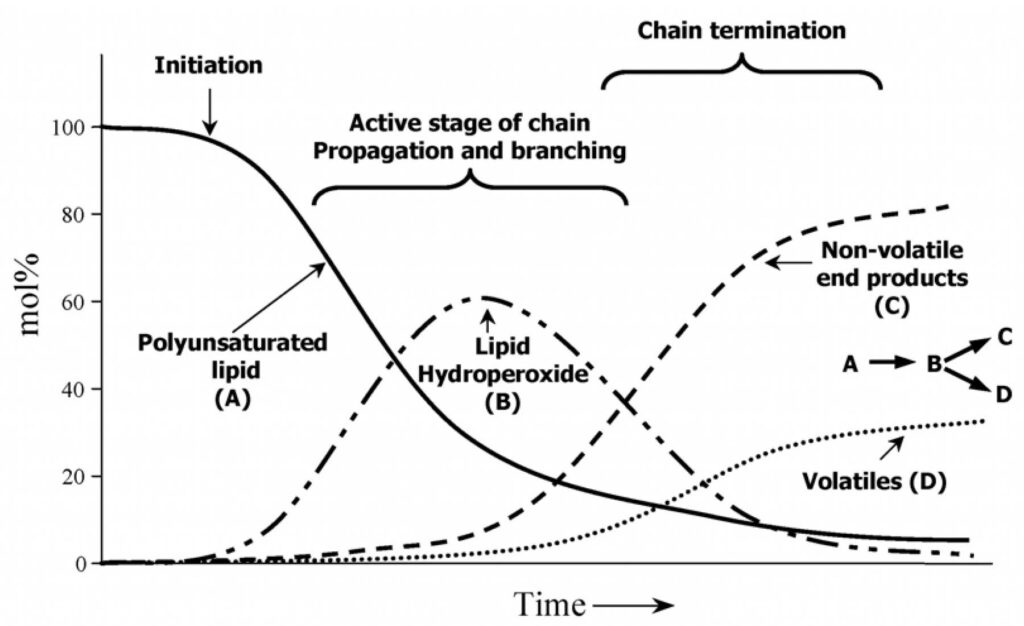
The autoxidation process from oxygen absorption to hydroperoxide formation and the resulting cross-linking of fatty acids results in non-volatile substances.
The process can be summarized as follows:
Absorption of Oxygen: The unsaturated bonds in the fatty acids of linseed oil react with oxygen molecules from the air.
Formation of Hydroperoxides: The absorbed oxygen leads to the formation of hydroperoxides, which are unstable intermediates in the drying process.
Free Radical Generation: Hydroperoxides decompose into free radicals, propagating the chain reaction necessary for cross-linking.
Cross-linking of Fatty Acids: The free radicals facilitate the cross-linking of fatty acid chains, resulting in a polymerized network that forms a solid film.
Completion of Drying: As the cross-linking progresses, the oil paint film becomes increasingly solid and durable.
In contrast, using driers for oil paint accelerates this natural process. Metallic driers, such as cobalt, manganese, and lead compounds, catalyze the formation of free radicals, essential for cross-linking the fatty acids. This leads to a much faster transition from a liquid to a solid state, reducing drying times from several days to just a few hours. However, this accelerated drying process also brings about changes in the physical properties of the paint film, which can have long-term implications.
How Oil Paint Driers Work
The chemical mechanism behind oil paint driers revolves around their ability to facilitate the generation of free radicals. When introduced into the oil paint, metallic driers interact with the hydroperoxides formed during the early stages of oxidative polymerization. These hydroperoxides decompose into free radicals under the influence of the metal ions present in the driers. These free radicals then initiate and propagate the cross-linking of the fatty acid chains within the oil, forming a polymerized network that solidifies the paint.
Want to read the full article and unlock all resources? Choose an option below:
Explore historical oil painting siccatives, including lead oxide, alum, and Venetian glass. Learn how to prepare and use these traditional driers in painting.
Explore the process of paint film formation. This article demystifies the science behind the drying and film formation of artists’ acrylic and oil paints, offering insights into materials, techniques, and best practices for creating enduring artworks.
Discover the impact of paint driers on oil and alkyd paints. Learn how to choose the right driers to enhance the quality and durability of your artwork.
Excellent explanation of the drying processes and what to look out for using siccatives. One thing you didn’t go much into was how the climate in the environment affects those siccatives. For example the effect of dry climate in the west coast vs. the humid east coast and how the siccatives you mentioned behave in each areas due to the environment. Would love to learn more in that respect.
Hi George,
You commented on how the presence of metals in pigments typically enhances the paint’s drying time, however you don’t mention cadmium’s and titanium. I bring this up as I find the cadmium’s tend to take a really long time to dry – they will stay open on the palette for a really long time. Titanium, in my experience with it 20 years ago, before switching to lead, I found keeps a painting wet for weeks at times. In the case of titanium I’m guessing it’s because of the large oil to pigment ratio needed to make titanium become a paint. Is this correct! I have no clue why the cadmiums would stay open so long. Comments?
Report
There was a problem reporting this post.
Block Member?
Please confirm you want to block this member.
You will no longer be able to:
See blocked member's posts
Mention this member in posts
Invite this member to groups
Message this member
Add this member as a connection
Please note:
This action will also remove this member from your connections and send a report to the site admin.
Please allow a few minutes for this process to complete.
Report
You have already reported this .
Subscribe to Our Newsletter
To begin reading the content, join thousands of artists enjoying our articles. Subscribe to receive updates on artists materials and practices.




Excellent explanation of the drying processes and what to look out for using siccatives. One thing you didn’t go much into was how the climate in the environment affects those siccatives. For example the effect of dry climate in the west coast vs. the humid east coast and how the siccatives you mentioned behave in each areas due to the environment. Would love to learn more in that respect.
I like to use alkyd mediums to accelerate drying times. How do alkyd mediums compare to the ones in this article?
Hi George,
You commented on how the presence of metals in pigments typically enhances the paint’s drying time, however you don’t mention cadmium’s and titanium. I bring this up as I find the cadmium’s tend to take a really long time to dry – they will stay open on the palette for a really long time. Titanium, in my experience with it 20 years ago, before switching to lead, I found keeps a painting wet for weeks at times. In the case of titanium I’m guessing it’s because of the large oil to pigment ratio needed to make titanium become a paint. Is this correct! I have no clue why the cadmiums would stay open so long. Comments?