Why Varnish a Painting Matters
A sound varnish layer not only makes a painting shine but also restores optical depth, protects fragile surfaces, and unifies gloss. When you varnish a painting, the decisions you make determine whether the finish endures or degrades. Conversely, a poorly chosen or mishandled varnish can yellow, crack, or even pull pigment from the surface. James Bernstein’s 1992 paper, A Review of Varnish Application Fundamentals, remains one of the clearest roadmaps for artists who prefer to finish their own work. The paper breaks the task into predictable variables and offers studio-tested protocols that sit comfortably alongside modern coatings science—vital guidance when, for example, a spray-coated acrylic develops a milky moisture haze or a brush-applied dammar lifts pigment from raised impasto.
Six Variables to Varnish a Painting Successfully
To put theory into practice, Bernstein reduces every varnish scenario to six interacting factors—resin, solvent, additives, application system, environment, and the painting itself—each of which affects film formation and future clean-off. Keep a simple log for every session. That habit will pay dividends when a surface misbehaves months later.
1. Resin Choice
Resins range from small-molecule dammar to large-molecule acrylics such as Paraloid B-72. Small resins exhibit excellent wetting—the capacity of a varnish solution to reduce surface tension, allowing it to spread uniformly and penetrate micro-texture—yielding strong gloss; however, they embrittle and yellow more quickly. Large resins resist abrasion and moisture, but they may gray on aging and are more difficult to dissolve and remove. A common conservation strategy is to brush on a lean coat of dammar for saturation and, after in‑painting, spray a thin B‑72 “skin” for durability. When Bernstein wrote in 1992, commercially available low‑molecular‑weight synthetic resins were limited; since then, Eastman Chemical’s Regalrez 1094 and BASF’s Laropal A81 have emerged as conservation‑grade small‑molecule varnishes that combine high clarity with improved aging resistance, and they now belong in every artist’s arsenal.
2. Solvent Strategy
A solvent must both dissolve the chosen resin and provide sufficient working time. Fast solvents improve edge definition but risk brush drag and moisture bloom; slow solvents level well yet can cause creep or reticulation. Rather than relying on a single solvent, blend aliphatics (non‑polar aliphatic hydrocarbons) and aromatics (ring‑structured, more polar solvents) to adjust the open time.
3. Additives—Use Them Sparingly
Ultraviolet absorbers extend the life of small resins, but only at very low dosages. Measure with a syringe; don’t guess. Matting agents veil color and should be avoided unless the artistic intent demands a low-sheen surface.
4. Application System
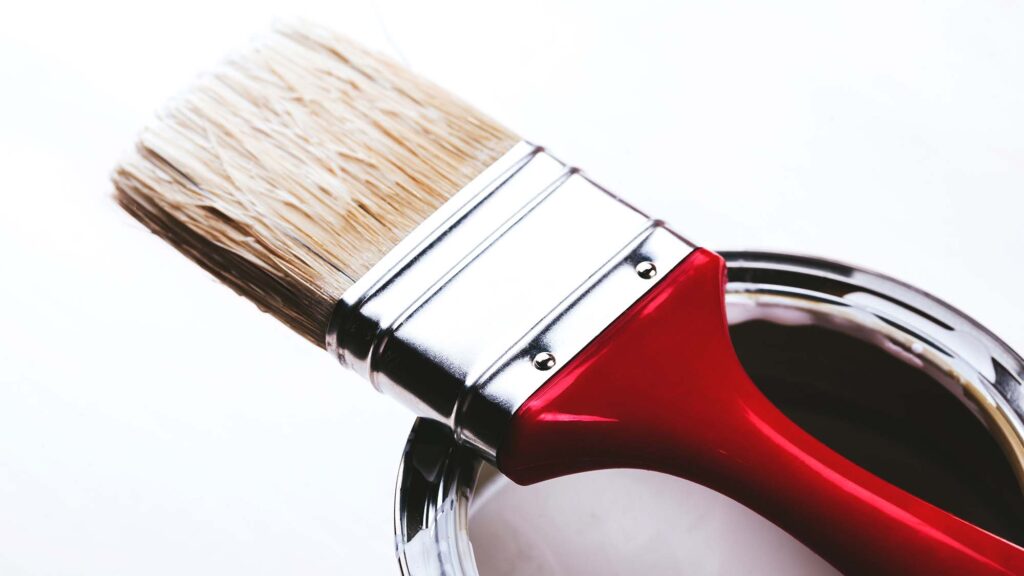
Brush and spray each have a rightful place. Use a brush to saturate porous passages. Then, spray progressive films to build even gloss on large or delicate works. Airbrushes excel at detail, yet industrial high-volume low-pressure (HVLP) spray guns—such as the Fuji Mini-Mite 4—handle full-size canvases. In conservation studios, these units are most often configured as High-Volume Low-Pressure (HVLP) systems, providing fine atomization with minimal solvent waste.






Responses