The longevity and preservation of oil paintings are crucial for artists and conservators. Two pivotal studies—one by Janas et al. in Heritage Science and another by Marion Mecklenburg and colleagues—provide critical insights into how oil paints age and respond to environmental conditions. These findings are essential for artists seeking to understand the mechanical properties of oil paints and how different substrates and environmental factors can impact their work over time.
Key Findings on Oil Paint Aging and Brittleness
Oil paints undergo significant chemical and mechanical changes as they age. Janas et al.’s study highlights that oil paints become stiffer and more brittle over time due to molecular changes, which include cross-linking of molecules. This brittleness can lead to cracking, especially when the paint layer is restrained by a dimensionally stable substrate, such as a wooden panel. The study provides evidence that some oil paints can be more brittle than the glue-based ground layers beneath them, challenging the traditional understanding of the painting structure’s weakest points.
Mecklenburg’s research further explores these changes by examining the mechanical behavior of oil paints over long periods. His findings reveal that the embrittlement of oil paints does not slow down significantly, even after several decades. Factors such as temperature, relative humidity (RH), and solvents play substantial roles in altering the mechanical properties of paints. For instance, low temperatures can cause immediate brittleness in paint films, a condition that reverses when temperatures rise. In contrast, high temperatures lead to permanent changes due to the volatilization of plasticizers.
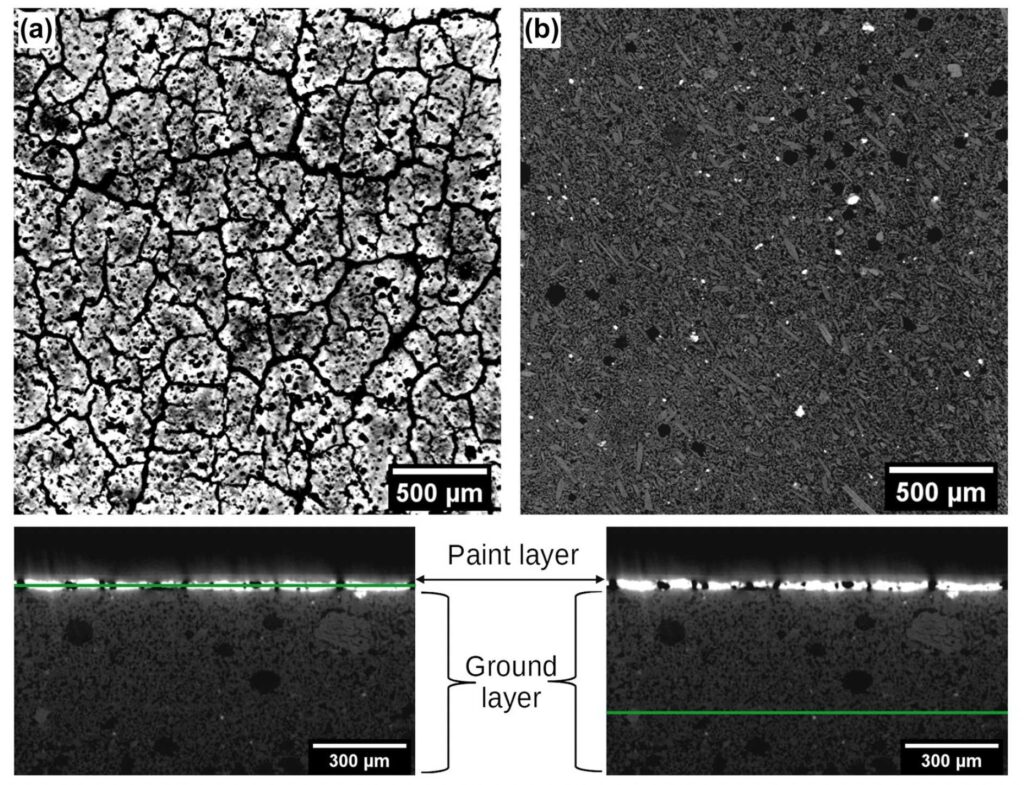
X-ray microtomography of the paint layer in a historic panel painting; cross-sections parallel to the surface: a paint layer, b ground. For presentation, the X-ray absorbing material is represented on a grey scale in which white and black colours correspond to highly and least absorbing materials, respectively. The black spots in the X-ray microtomography of the paint layer correspond to grains of the blue pigment, most probably natural ultramarine.
Consequences of Long-Term Shrinkage and Environmental Sensitivity
A significant observation from Janas et al.’s study is the cumulative shrinkage of oil paints over time. As paints age, they shrink due to the evaporation of low-molecular-weight components and molecular rearrangements within the paint film. This shrinkage can exceed the paint’s strain at break—the point at which it can no longer stretch without cracking—particularly when restrained by a stable substrate. X-ray microtomography vividly demonstrated this phenomenon, which showed cracking in a 17th-century panel painting’s oil paint layer while the ground layer remained intact.
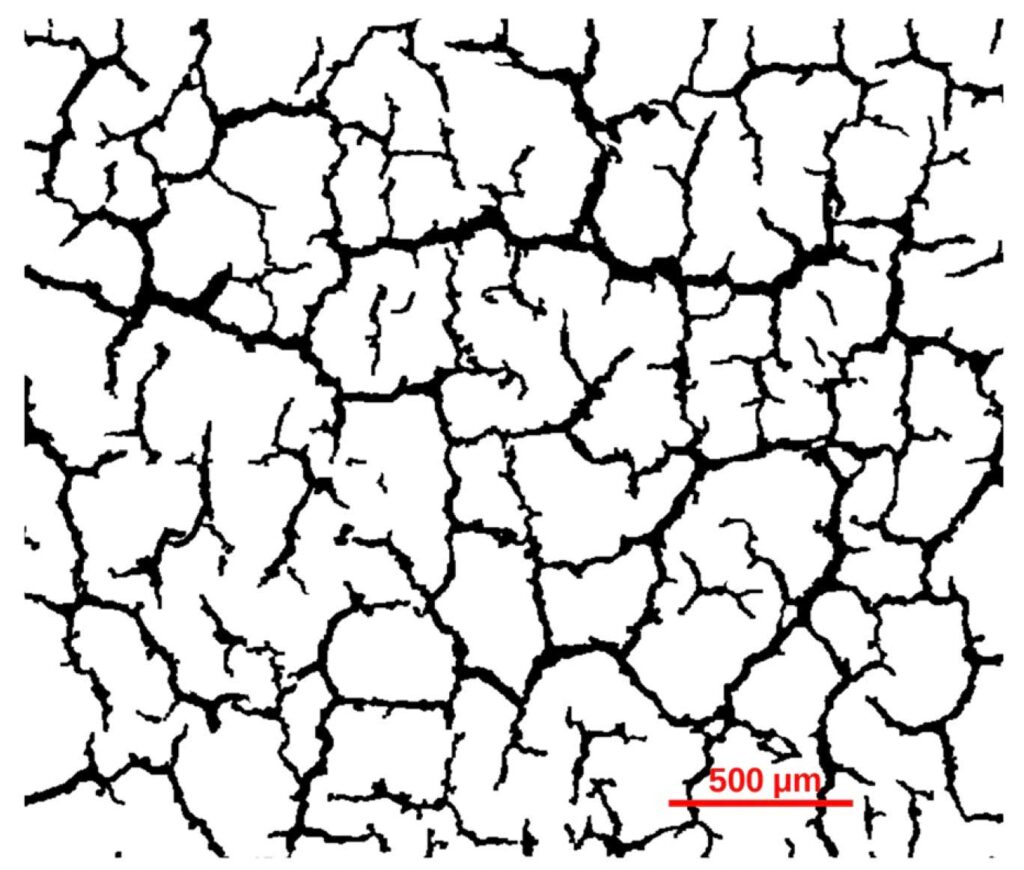
A high-contrast image of the crack pattern extracted from the X-ray microtomograph from the previous figure is shown with the spots of the blue pigment removed.
Mecklenburg’s studies complement these findings by showing how different pigments and binders affect paint flexibility and brittleness. For example, paints containing zinc oxide are known to become extremely brittle relatively quickly, often within just a few years. On the other hand, paints with basic lead carbonate tend to remain flexible for longer but gradually increase in stiffness and strength over time.
Understanding Mechanical Properties: What Artists Should Know
To fully appreciate the implications of these studies, it is crucial to understand some key mechanical properties:
Want to read the full article and unlock all resources? Choose an option below:
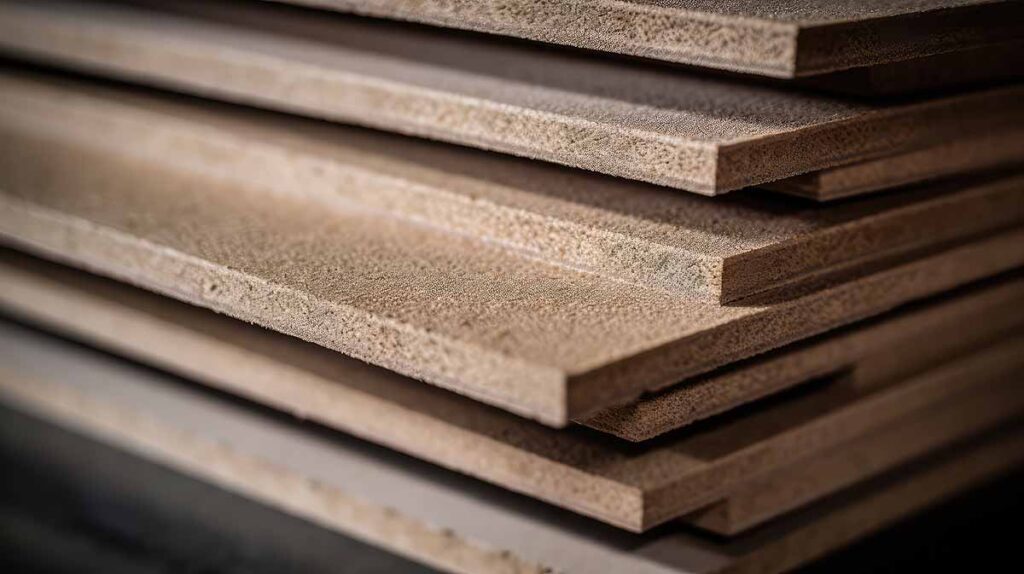
Painting on wood panels? Learn how plywood, MDO, and HDO boards serve as durable supports. This guide covers stability, surface prep, pros & cons, and best practices for oil, acrylic, and tempera.
What happens when your painting ground cracks? New research on gesso fracture toughness, acrylic primers, and zinc white reveals what your ground choice means for longevity.
Please note:
This action will also remove this member from your connections and send a report to the site admin.
Please allow a few minutes for this process to complete.
Report
You have already reported this .
Subscribe to Our Newsletter
To begin reading the content, join thousands of artists enjoying our articles. Subscribe to receive updates on artists materials and practices.





Responses