A traditional gesso recipe can work reliably for years and then behave differently after what seems like a minor change. Substitute a different chalk or marble dust, change the animal glue, or measure the same powder from a new supplier, and a familiar mixture may suddenly become thicker, thinner, harder to brush, more difficult to sand, or more absorbent after drying.
That does not necessarily mean the recipe is poor. Many traditional gesso recipes have long records of successful use. The problem is that the written recipe often describes only part of the material system.
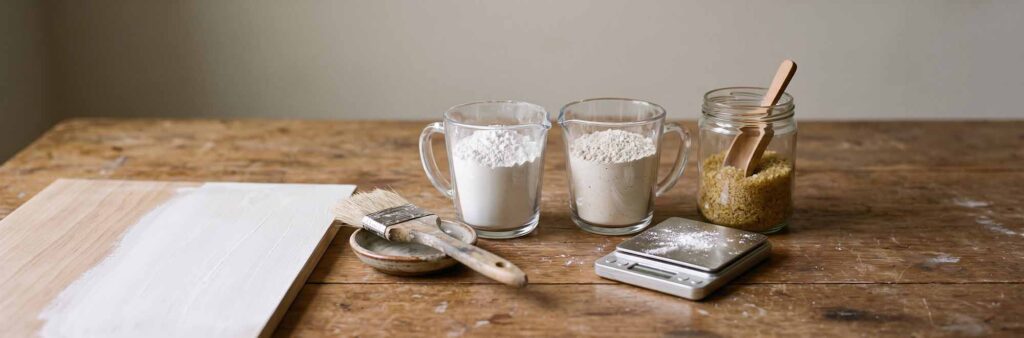
Some recipes specify dry ingredients by weight. Others use cups or equal volumes. Still others direct the artist or gilder to add whiting until it reaches a visual or tactile endpoint. All of these approaches can work in an experienced studio, but they do not control the same variables.
Modern materials science offers another way to describe the mixture: pigment volume concentration (PVC). In an animal-glue ground, PVC is the percentage of the dried pigment-binder solids occupied by mineral filler. Marion Mecklenburg’s experiments with rabbit-skin glue and calcium carbonate showed that relatively small changes in PVC can substantially change the mechanical behavior of gesso (Mecklenburg 1991, 164–66).
The useful lesson is not that traditional recipes should be replaced with laboratory formulations. It is that the recipe, the specific materials, and the maker’s working method form a single system. Change one part of that system and the same written instructions may no longer produce the same ground.
Why This Matters for Artists
Artists usually encounter formulation differences as changes in working properties rather than as numbers.



Responses