Artists and conservators face challenges when maintaining the long-term integrity of canvas paintings. One key concern is the formation of craquelure in canvas painting—those intricate networks of cracks on the surface of a painting. In the study “Development of Craquelure Patterns in Paintings on Canvas” by Marcin Bury and Łukasz Bratasz, we gain critical insights into why craquelure occurs and how to prevent it. For artists working with traditional materials, understanding the science behind craquelure is essential to preserving their work for future generations.
The Structure of Canvas Paintings and the Role of Craquelure
A canvas painting consists of multiple layers: the canvas support, a preparatory ground layer, and the paint itself. Craquelure forms when stress builds within these layers, often due to environmental factors like humidity or mechanical impacts. In their study, Bury and Bratasz show that variations in relative humidity (RH) can accelerate the formation of cracks. This is particularly concerning for artists because craquelure can be viewed as a natural aging process or damage that diminishes the artwork’s quality.
How Humidity Impacts Craquelure Formation in Canvas Art
Humidity plays a significant role in the development of craquelure. When RH drops dramatically, the canvas shrinks, which creates high tension in the painting’s layers. This shrinkage, particularly in glue-sized canvases, leads to cracking in specific areas, most often at the painting’s corners. Bury and Bratasz used a three-dimensional model to demonstrate how even minor RH changes can induce cracking, especially when the painting is tightly stretched. Controlling humidity is a key factor in preventing this damage.
This image from the study displays stress patterns in the ground layer of a canvas painting caused by a drop in relative humidity (RH) from 80% to 30%. The left image represents tensile stress (areas under tension), while the right image represents compressive stress (areas under compression). The color gradient from red to blue indicates stress levels, with red showing high stress and blue showing low stress. The arrows illustrate the directions of the stress forces, mainly concentrated near the upper right corner of the painting. These stress concentrations often lead to crack formation in these areas.
Practical Techniques for Preventing Craquelure in Canvas Painting
Artists can take several proactive measures to minimize craquelure formation. One of the most effective strategies is stabilizing humidity in both studio and gallery environments. Keeping RH between 50% and 65% helps prevent the sudden changes that cause canvas shrinkage and cracking. Additionally, selecting the right materials, such as thicker ground layers, can reduce the canvas’s vulnerability to environmental stress.
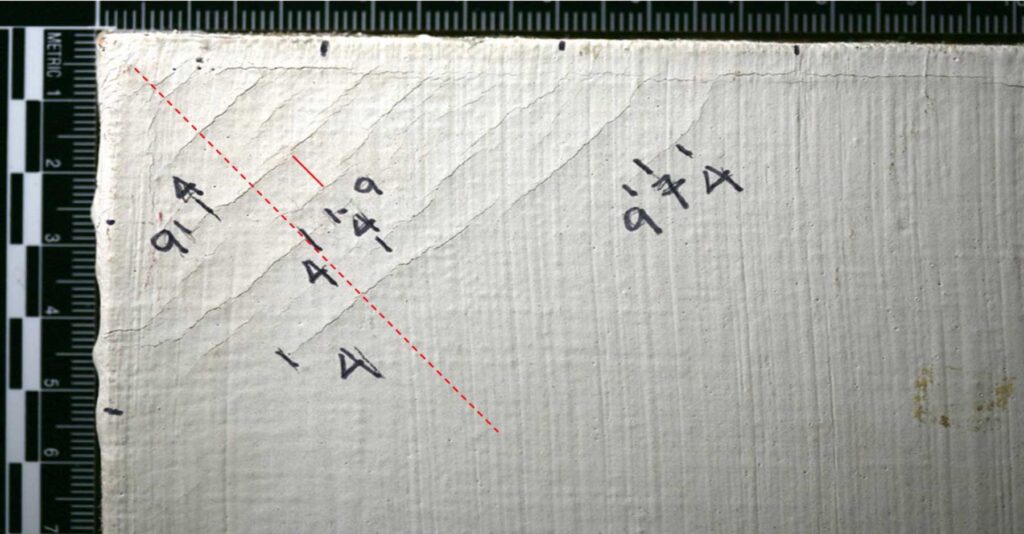
This image shows a canvas painting that has developed cracks after exposure to repeated cycles of relative humidity (RH) changes, ranging from 95% to 20%. The red line highlights the predicted spacing between the cracks, calculated using the sequential addition method. The dashed line marks the overall area affected by the cracking. The patterns demonstrate how humidity fluctuations can lead to stress-induced fractures in the canvas, particularly in areas prone to high tension.
Why Ground Layer Thickness Matters in Canvas Preservation
One of the study’s most important findings is the influence of ground layer thickness on the development of craquelure. Thicker ground layers slow down the canvas’s response to humidity fluctuations, effectively reducing the overall stress on the painting. Bury and Bratasz explain that thicker layers limit the canvas’s hygroscopic response, making it less susceptible to cracking during RH variations. For artists, applying a thicker preparatory layer can provide added protection against environmental changes. Most commercially prepared canvases have thin preparatory layers, making these products commercially attractive and viable to both hobbyists.
How Flexible Stretchers Reduce Crack Formation in Canvas Paintings
The choice of support system for canvas art plays a crucial role in mitigating the risk of crack formation, particularly craquelure, caused by environmental fluctuations. Distinguishing between traditional wooden stretchers and modern designs is key to understanding how advancements in flexibility have improved the preservation of canvas paintings. Historically, ”stretchers“ have often been conflated with “strainers,” but the distinction highlights significant differences in their structural behavior and conservation implications.
Want to read the full article and unlock all resources? Choose an option below:
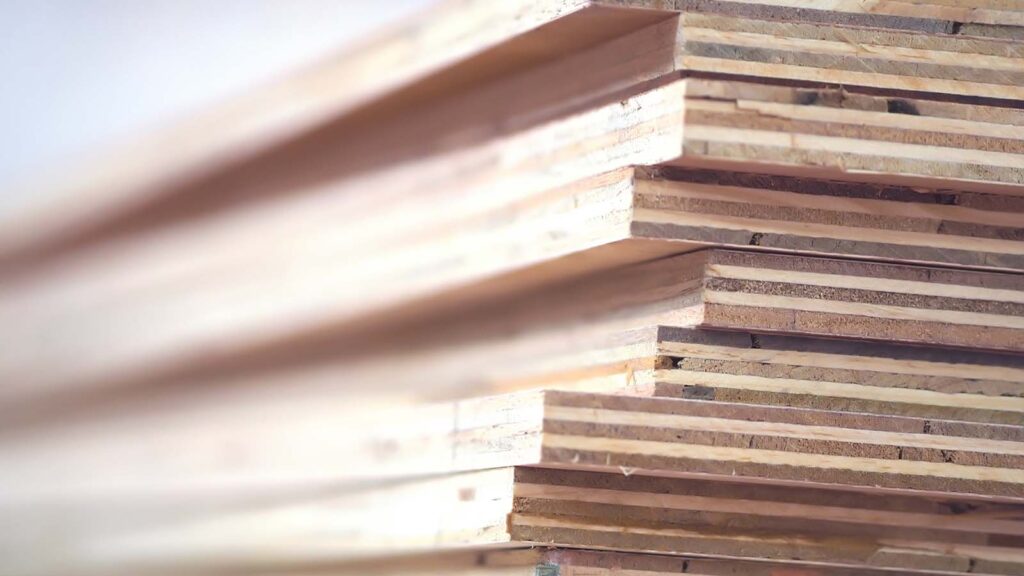
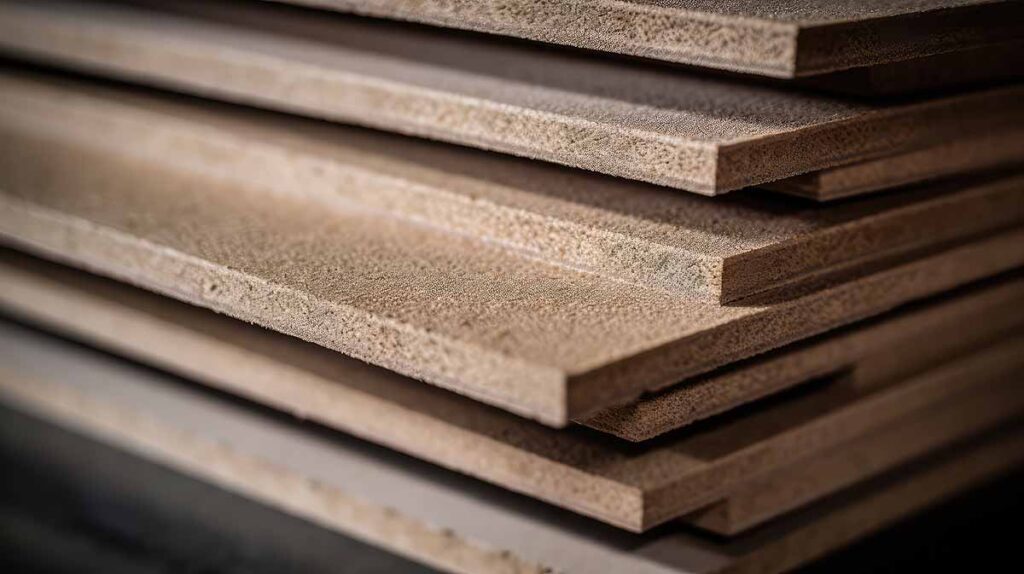
Painting on wood panels? Learn how plywood, MDO, and HDO boards serve as durable supports. This guide covers stability, surface prep, pros & cons, and best practices for oil, acrylic, and tempera.
Please note:
This action will also remove this member from your connections and send a report to the site admin.
Please allow a few minutes for this process to complete.
Report
You have already reported this .
Subscribe to Our Newsletter
To begin reading the content, join thousands of artists enjoying our articles. Subscribe to receive updates on artists materials and practices.





Responses