Canvas stretching techniques are fundamental yet often underexamined aspects of the structural integrity and long-term conservation of paintings. It also directly influences the working surface during the painting process, affecting brush response, paint application, and visual uniformity. In his pivotal article, “About the Choice of Tension for Canvas Paintings” (2009), Antonio Iaccarino Idelson provides a thorough investigation into the mechanical and historical complexities of stretcher design and tension systems. This review distills the essential information from the article to offer guidance to contemporary artists—particularly those making or using their own stretched canvases.
Canvas Stretching Techniques and the Problem of Traditional Stretchers
Traditional keyed stretchers—wooden frames that allow for expansion via corner keys—have been a standard in canvas preparation for centuries. However, as Iaccarino Idelson points out, these systems introduce challenges when exposed to environmental changes. Wood and canvas respond differently to fluctuations in humidity and temperature, resulting in internal stresses that compromise the paint film.
The stress is often most concentrated at the corners of the stretcher. As keys are adjusted to increase tension, the expansion may over-stretch these corners while failing to distribute tension evenly across the canvas surface. Spring-loaded stretchers were introduced as a modern solution to maintain consistent and responsive tension over time, particularly in environments with fluctuating conditions. While they offer the potential for dynamic tensioning, they also present notable pitfalls. The rigidity of the spring and its placement can result in uneven tension and increased mechanical stress over time, especially if the springs are stiff.
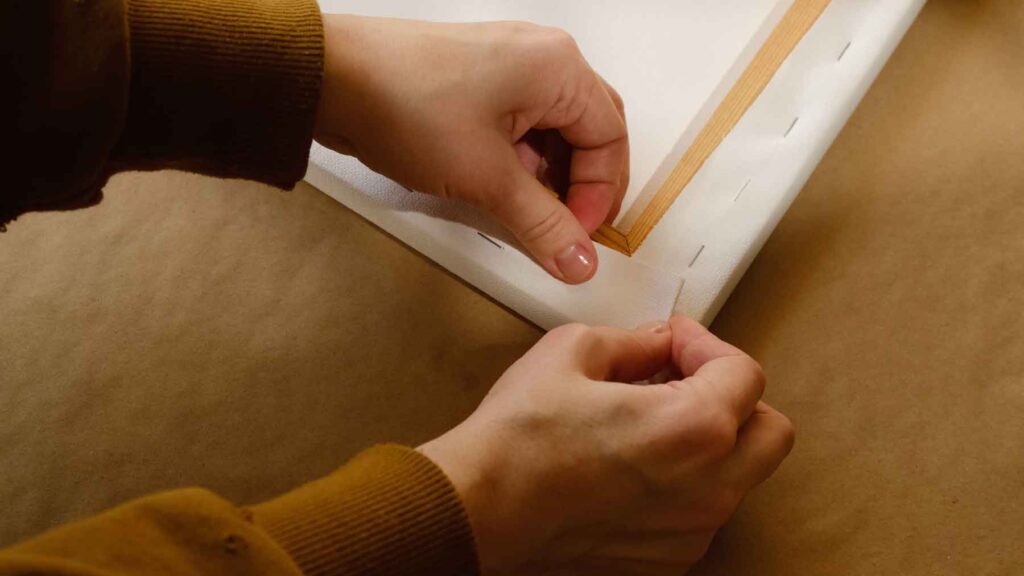
Figure 1: Painting Nailed to on a Traditional Stretcher Traditional stretcher with canvas tensioned and fixed by tacks or staples. The stretcher expands with environmental humidity, while the canvas and preparation layers contract, resulting in concentrated stress—particularly at the corners. This schematic illustrates the fundamental mechanical mismatch between the wooden support and the canvas, which can lead to potential damage over time. (From Antonio Iaccarino Idelson)
Innovations in Canvas Stretching and Elastic Tensioning Systems
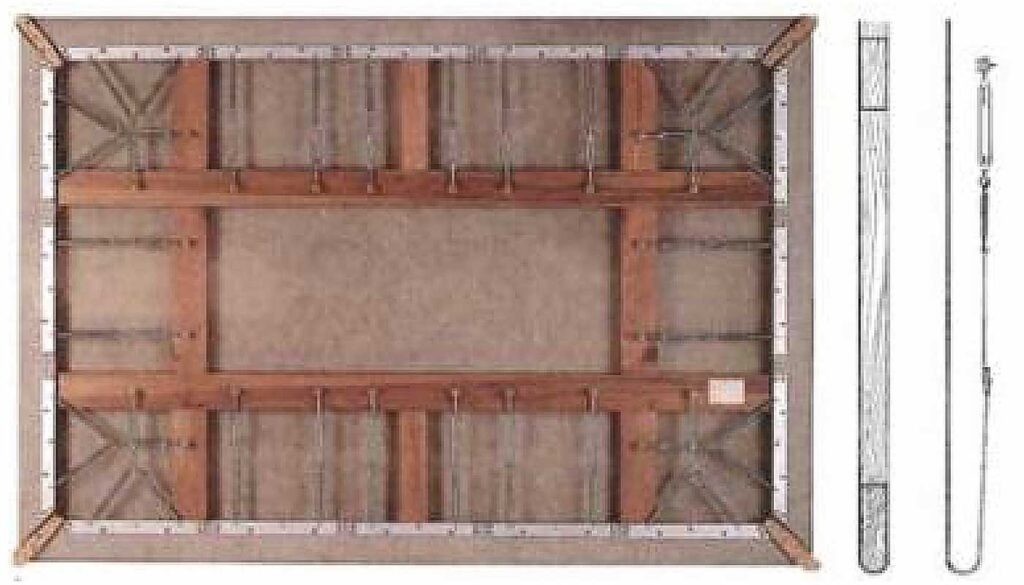
A breakthrough came in the 1950s with R. Carità’s development of elastic tensioning systems at the Istituto Centrale per il Restauro (ICR). This method decouples the tensioning function from the structural support. A lining canvas is mounted over a rounded profile and kept under tension using perimeter-placed springs. This design improves tension distribution and reduces the stress traditionally found at corners.
Such systems not only minimize the mechanical strain on original artworks but also offer reusability and lighter stretcher structures. These improvements align with modern conservation ethics that prioritize the preservation of original materials and minimal intervention.
Figure 3: Diagram of Elastic Tensioning System A photograph and technical drawing of an elastic tensioning stretcher developed by R. Carità. This system uses springs distributed along the perimeter to maintain even tension across the canvas. It separates the structural support from the tensioning mechanism, helping prevent localized stress and long-term deformation. This design has informed many modern conservation practices and offers valuable insight into alternatives to traditional keyed stretchers. (From Antonio Iaccarino Idelson)
Measuring and Calibrating Canvas Tensioning
Quantifying the correct tension has long been an elusive goal. Earlier references, such as Carità’s tension values for the 1957 restoration of Caravaggio’s “St. Jerome,” lacked sufficient methodological detail to serve as universal guidelines. Later efforts by researchers like Gustav Berger and Alain Roche contributed by suggesting optimal ranges (1–2 N/cm), but the practical application remained inconsistent. For clarity, N/cm (Newtons per centimeter) is a unit of linear tension that represents the force applied per unit length of canvas. It provides a standardized method for describing how tightly a canvas is stretched.
Want to read the full article and unlock all resources? Choose an option below:
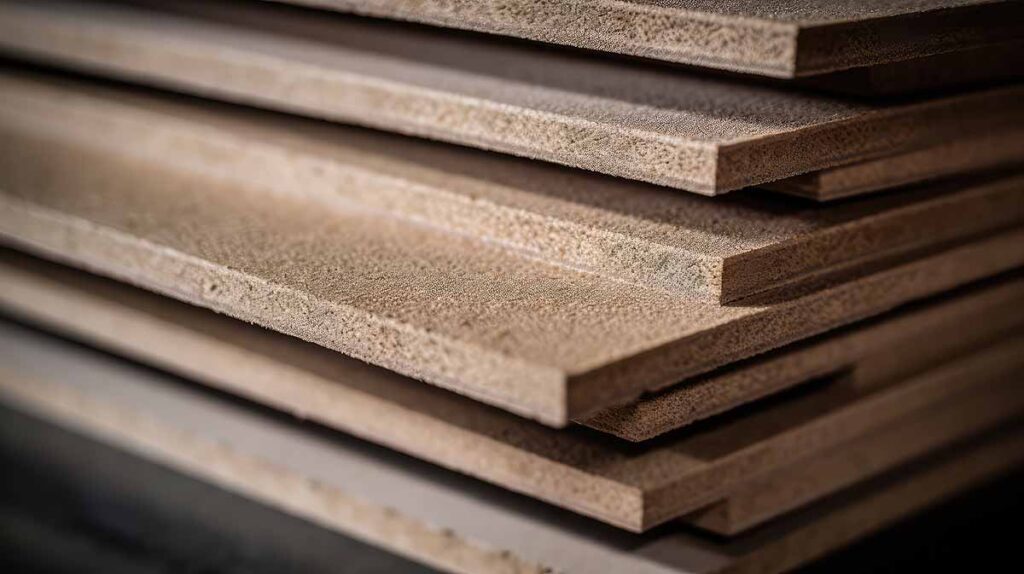
Painting on wood panels? Learn how plywood, MDO, and HDO boards serve as durable supports. This guide covers stability, surface prep, pros & cons, and best practices for oil, acrylic, and tempera.
Please note:
This action will also remove this member from your connections and send a report to the site admin.
Please allow a few minutes for this process to complete.
Report
You have already reported this .
Subscribe to Our Newsletter
To begin reading the content, join thousands of artists enjoying our articles. Subscribe to receive updates on artists materials and practices.





Responses