Painting on MDF: Safe Supports for Painting?

Medium-density fiberboard (MDF) and related fiberboards are everywhere in studios as supports for painting on MDF panels. They are flat, cheap, and easy to cut, so many painters now treat them as modern replacements for traditional wood panels. However, these boards were engineered for furniture and interior construction, not for long‑term conservation of oil painting on MDF or other media. Museums and conservation scientists have spent the last two decades studying how MDF behaves in sealed display cases and buildings, where its emissions and moisture response can damage collections and affect human health. Those findings are directly relevant when you use MDF painting panels as the primary support for an oil painting.

This article reviews what is known about MDF and other fiberboards from conservation, wood‑science, and paper‑degradation research, and translates it into practical guidance for professional painters. It addresses short‑ and long‑term risks, considers the role of lignin and acidic by‑products, and looks critically at the adhesives that bind the fibers together. It also compares MDF with other rigid supports and provides a conservative preparation protocol for artists who still choose to work on it.

The goal is not to dictate one “correct” support, but to make the risks explicit so you can decide when MDF is acceptable—for example, for studies or small works—and when a more stable panel is justified.

What Are MDF and Fiberboards for Painting on MDF Supports?

Composition and manufacturing

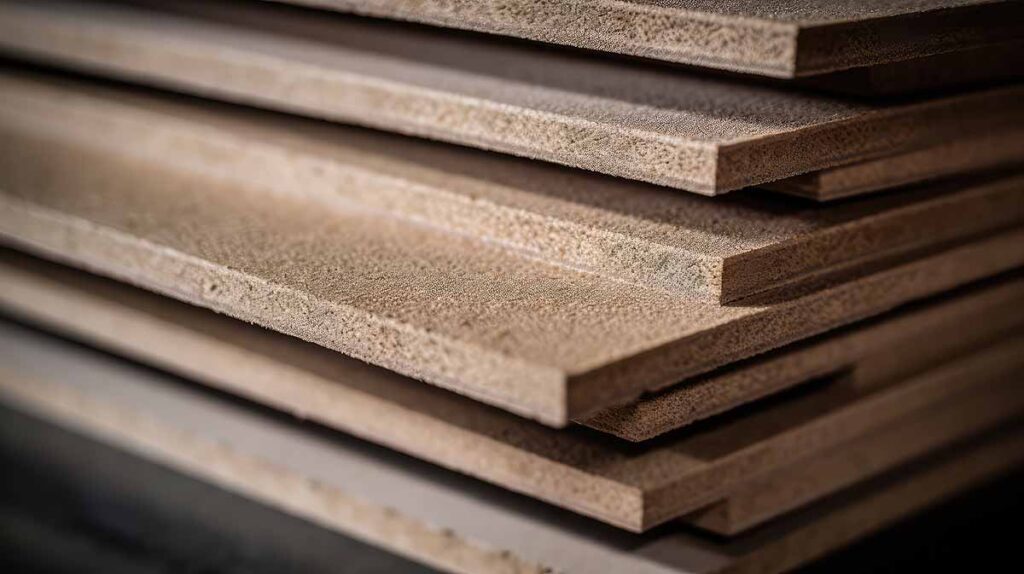
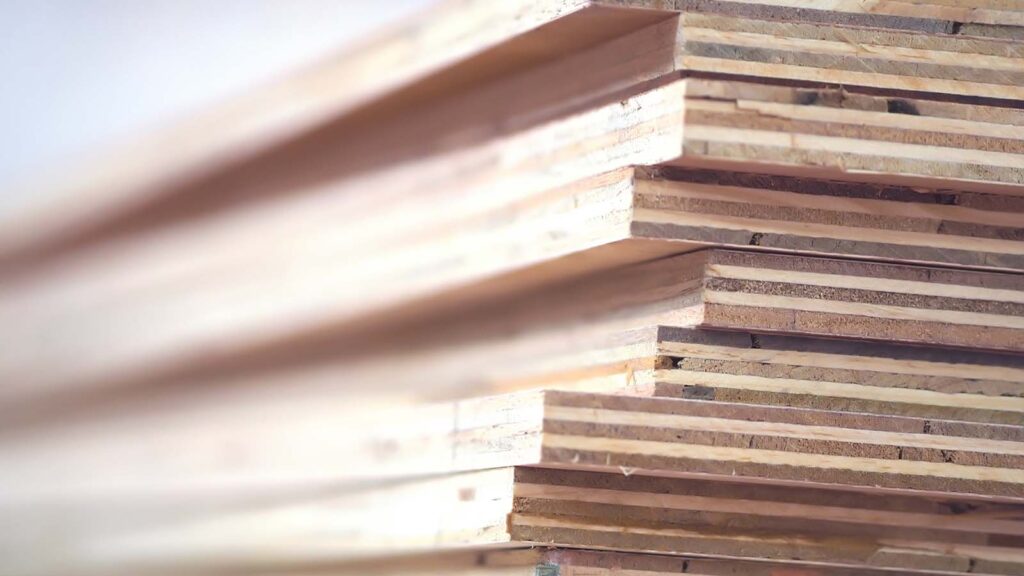
MDF is an engineered wood product made from wood fibers, synthetic resin, and small amounts of wax and water. Typical commercial boards are roughly 80–85% lignocellulosic fiber, 9–10% urea‑formaldehyde (UF) or melamine‑urea‑formaldehyde (MUF) resin, about 1% paraffin or other wax, and the remainder water. Fibers are dried, mixed with resin and wax, formed into a mat, and hot‑pressed under high temperature and pressure. The result is a smooth, dense, isotropic panel with no visible grain.

Other common fiberboards include:

  • High‑density fiberboard (HDF) and hardboard (e.g., Masonite®, originally a proprietary wet‑process hardboard invented by William H. Mason in Laurel, Mississippi, in the 1920s) are produced via wet or wet/dry processes. Early hardboards relied heavily on the wood’s own lignin as the binder; modern boards often include added resins.
  • Low‑density fiberboard (LDF) is used where insulation and low weight are more important than strength.

All of these panels are hygroscopic because they are composed primarily of wood fiber. They absorb and release moisture with changes in relative humidity (RH), leading to dimensional changes, internal stresses, and, over time, chemical degradation.

Want to read the full article and unlock all resources? Choose an option below:

Already a member? Log in to continue Try 7 days free — $0
Cancel anytime · 30-day money-back guarantee

Related Articles

Responses

Leave a Reply to Koo

Your email address will not be published. Required fields are marked *


Cancel reply

  1. An excellent article; comprehensive and clear. It’s hard to find this information, so this article should be an important resource for artists going forward – especially tempera painters, who so often work on MDF. Thanks, George.

Subscribe to Our Newsletter

To begin reading the content, join thousands of artists enjoying our articles. Subscribe to receive updates on artists materials and practices.

Or Join as Member for More Benefits