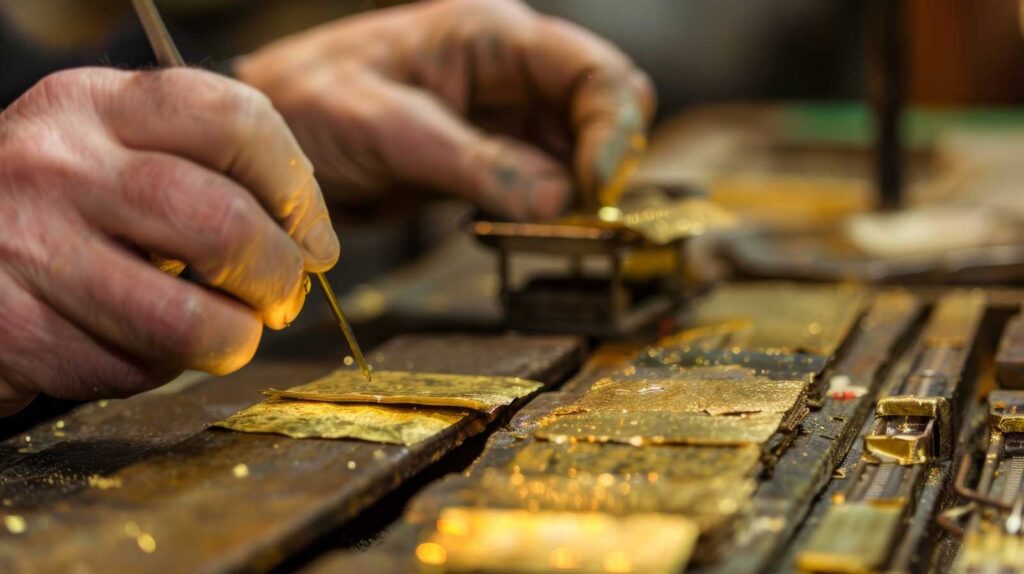
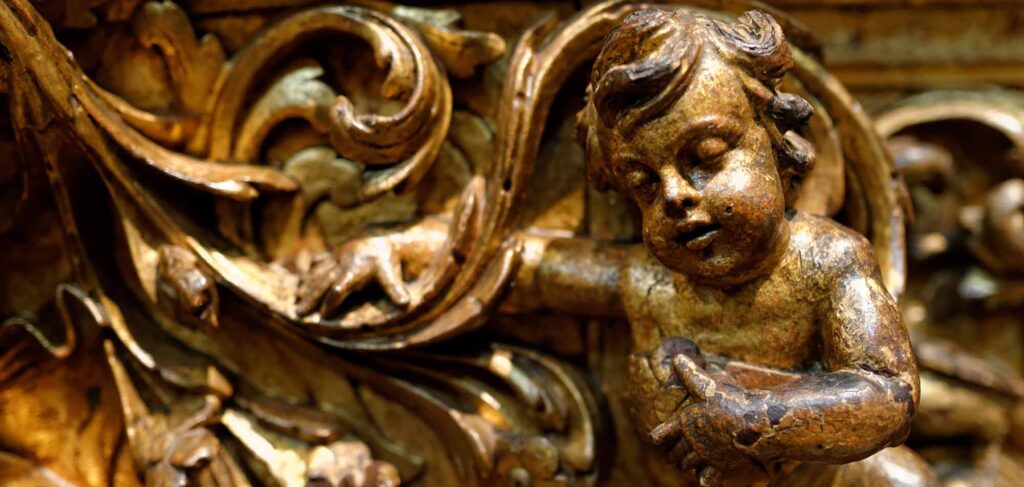
Artists and gilders strive to create works that stand the test of time, combining beauty with resilience. Gesso grounds are foundational to gilding, providing the stability and smoothness required for applying delicate gold leaf. Recent research into Portuguese Baroque gilding techniques sheds light on the composition, application, and performance of these materials, offering practical insights for modern artists. In the study Scientific Evaluation of the Durability of Baroque Gesso Gilding Grounds, the authors explore the role of particle size and shape, Pigment Volume Concentration (PVC), and the application of multiple layers in enhancing the durability of gilding gesso grounds.
The Role of Gesso Grounds in Gilding
Gesso grounds are multi-layered systems that prepare surfaces for gilding. In Portuguese Baroque art, the system typically consists of a coarse base layer (gesso grosso) and a finer top layer (gesso mate). Each layer serves a specific purpose: gesso grosso provides structural support, while gesso mate ensures a polished surface suitable for bole and gold leaf. The study under review emphasizes the importance of particle size, pigment volume concentration (PVC), and the interaction of materials in determining durability and appearance.
Understanding Gesso Mate and Gesso Grosso
The terms gesso grosso and gesso mate have distinct roles and origins in Portuguese gilding traditions. While gesso mate is etymologically unrelated to the Italian gesso sottile (“subtle gesso”), their functions are equivalent, as confirmed by parallels with the methods described in Cennino Cennini’s Il libro dell’arte (The Craftsman’s Handbook). These terms encapsulate centuries of artistic practice adapted to local materials and traditions.
Gesso Grosso
Gesso grosso, coarse in texture, is the foundational layer in the gilding system. It is composed of larger gypsum particles, typically between 5 and 250 micrometers, providing mechanical strength. This layer absorbs stresses, reducing the risk of cracking in the upper layers.
Gesso Mate
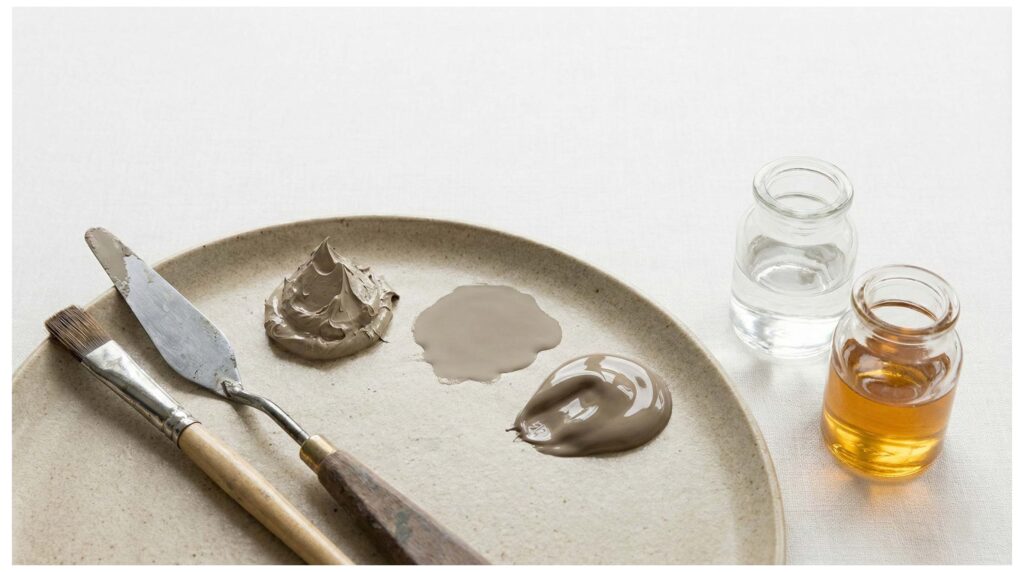
Also known as “fine gesso,” gesso mate consists of smaller particles (5 to 50 micrometers) and is applied in thin, even coats. This layer is vital for achieving a smooth, reflective finish that enhances the brilliance of the gold leaf. Its name reflects the softer, matte appearance before burnishing.
Both layers are mixed with animal glue, traditionally parchment glue, to bind the gypsum particles and form a cohesive structure. These materials are applied in successive layers, allowing each to dry fully before the next is added.





Embark into the expansive universe of EVE Online. Become a legend today. Trade alongside thousands of explorers worldwide. [url=https://www.eveonline.com/signup?invc=46758c20-63e3-4816-aa0e-f91cff26ade4]Join now[/url]