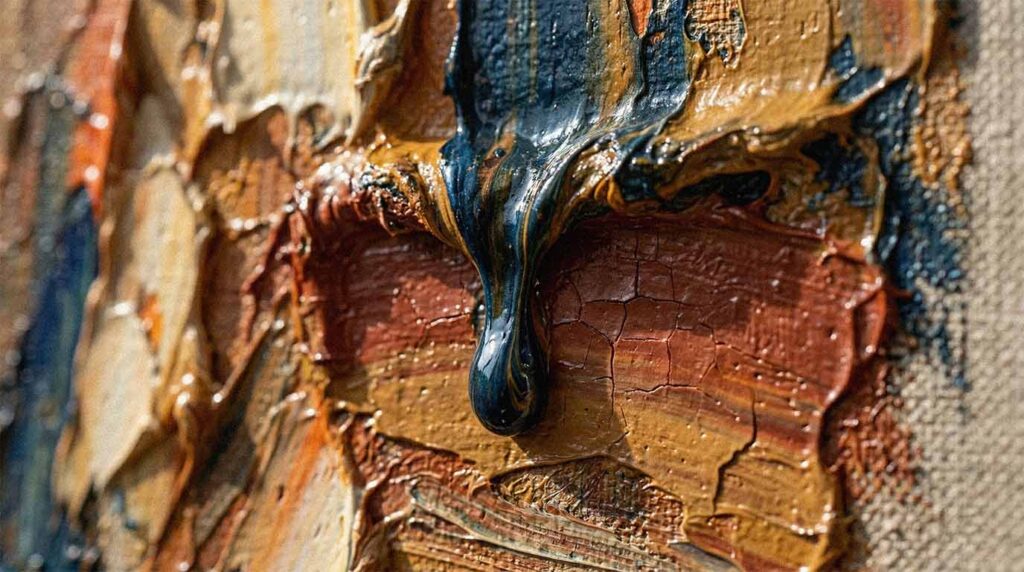
Impasto paint produces a surface that is not only visual but physical. However, impasto paint cracking is one of the most common long-term problems associated with this technique. The paint stands proud of the support, sometimes by several millimeters, and carries its own internal structure. That structure does not age in the same way as thin paint. Conservation studies show that thick oil paint layers can change shape, soften, separate, or even flow long after they appear dry. These changes are not rare anomalies; they recur across different artists, materials, and decades of practice. Many of the failures described in conservation studies of impasto are not solely due to technique, but to how modern paint formulations behave when applied in thick layers.
This article draws on documented conservation research to explain how and why these changes occur. In particular, it addresses impasto paint cracking and related failures that develop in thick oil paint over time. The goal is to translate those findings into terms that are meaningful in the studio. Where the literature identifies mechanisms, those are explained carefully. Where uncertainty remains, that uncertainty is stated directly.
What Makes Thick Imapsto Paint Behave Differently
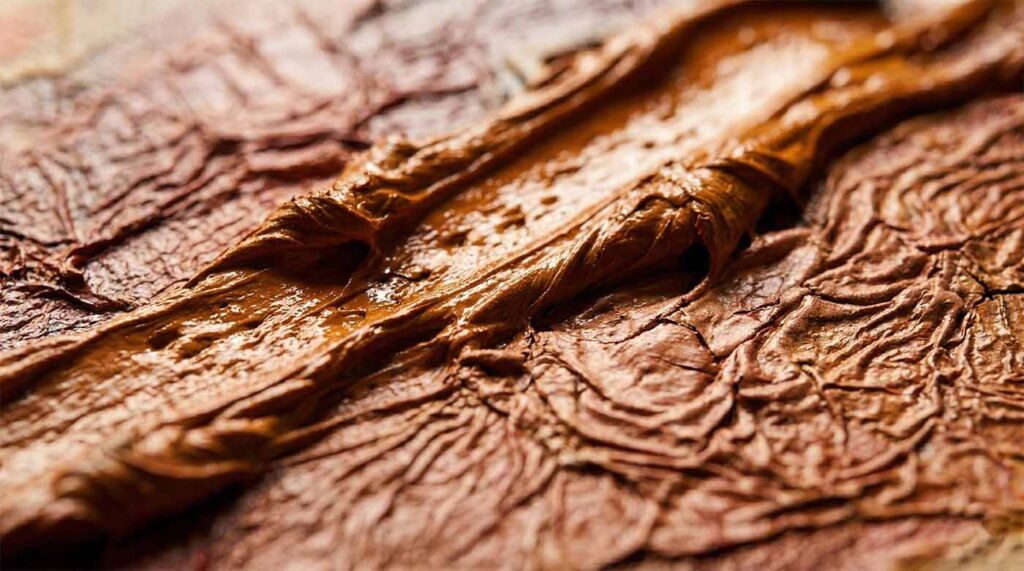
Oil paint dries by reacting with oxygen from the air. In thin layers, oxygen can readily reach most of the paint film. In thick paint, however, the situation changes. The outer surface reacts first, forming a more solid skin. Beneath that surface, the paint can remain softer for a much longer time. This difference in drying through the depth of the paint creates internal stresses and uneven mechanical properties.
In addition, thick paint contains more oil and more pigment in a single location. Over time, components within the paint can move short distances. This movement is not visible at first, but it can eventually lead to changes at the surface. These include softening, the appearance of glossy or wet-looking areas, and, in some cases, the emergence of drips.
Finally, thick paint is affected by gravity in a way that thin paint is not. If the internal structure weakens, even slightly, the paint can begin to slump or flow. These effects may take years to appear, which is why they are often surprising to artists.
Interlayer Failure and Impasto Paint Cracking: Delamination, Cleavage, and Curling
One of the clearest findings from conservation studies is that thick paint often fails between layers rather than at the surface. This type of failure is called delamination or cleavage. Instead of a crack forming only at the top, a separation develops within the layered structure of the painting.



Responses