Why This Egg Tempera Painting Study Matters in the Studio
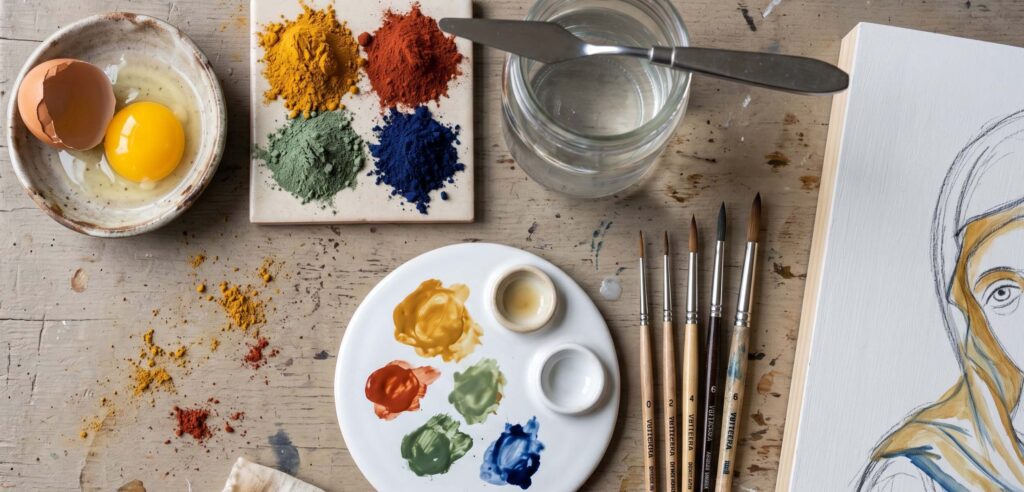
Egg tempera painting is one of the oldest practices still in active use. It produces luminous, matte films that have survived for centuries on Italian panel paintings. However, the binder’s chemistry is not fully proteinaceous, despite the common shorthand. It contains lipids, proteins, polysaccharides, and inorganic compounds, and the lipid fraction behaves a great deal like a slow-drying oil (Casoli, Berzioli, and Cremonesi, 2012, pp. 39–40).
That fact has consequences for every egg tempera painting you produce. Tempera films age, harden, and respond to solvents and water in ways that affect both your cleaning choices and your long-term varnishing decisions. Therefore, the 2012 study by Antonella Casoli, Michela Berzioli, and Paolo Cremonesi — published in Smithsonian Contributions to Museum Conservation — deserves attention from anyone who paints in egg tempera or owns tempera works.
The authors set out to map exactly what emerges from an egg tempera painting when a swab containing water, ethanol, acetone, or isooctane is rolled across it. They tested fresh laboratory films, a seventeen-year-old reference sample, and a sixteenth-century panel painting. The results challenge a comfortable assumption: that very old tempera is essentially inert to gentle cleaning.
The Chemistry Behind Egg Tempera Painting
Painters often describe egg tempera as a protein binder. That is a useful shorthand and a misleading one. Egg yolk is dominated by lipids, with proteins playing a smaller structural role.
Yolk: A Lipid-Heavy System
Egg yolk is approximately 66% lipid by mass (Casoli et al., 2012, p. 39). These lipids exist as triglycerides (the same molecular family as drying oils), phospholipids, and cholesterol. The fatty acid distribution in yolk lipids breaks down as 38% saturated, 42% monounsaturated, and 20% polyunsaturated (Casoli et al., 2012, p. 39). Therefore, yolk has fewer reactive double bonds than linseed oil and dries more slowly through the same oxidative polymerization pathway.
Proteins are present too, and they do something that the oil in a linseed binder cannot. They provide a polymeric backbone immediately upon film formation. Consequently, fresh tempera sets up faster than fresh oil paint, even though full chemical maturation takes years.




Very interesting, George. Thanks for posting and interpreting the article for us. A couple of questions.
1. Many tempera artists like to polish (using fine cheesecloth, microfiber, etc.) the surfaces of their egg tempera paintings upon completion, to elicit and even out surface shine (which increases as the mechanical rubbing action microscopically smoothes the microscopically rough, irregular surface of a high PVC, egg tempera film). Clearly the action of polishing must be removing proteins, etc. How detrimental do you think this could be for the long term durability of the paint film?
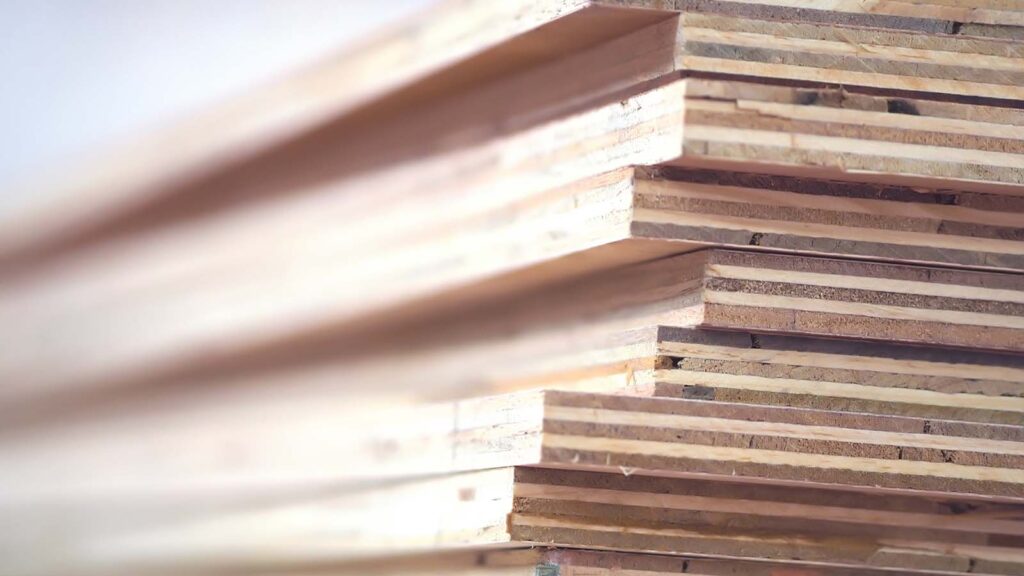
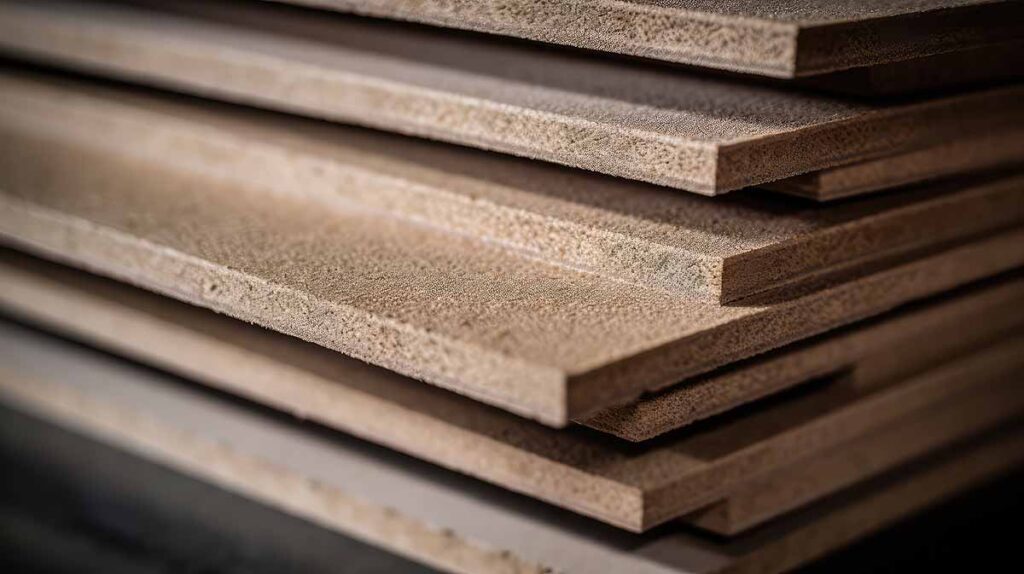
2. For lipid migration to happen evenly over time, the article suggests using permeable support. How detrimental do you think a non-permeable support (such as aluminum) is to the long term health of the paint film? (FYI, I also wonder about the long term consequences of water [RH] moving into the paint film, running into a non-permeable support and not exiting the paint film as rapidly as on a permeable support; how might that affect the paint film?)
Thanks! Koo
One more question….if one applies a solvent-based isolating or varnish layer, moving quickly with a brush over the surface to apply it, not reworking the coating, does that disturb the paint film significantly? Using solvents to clean an egg tempera surface, one is repeatedly wiping the same area of the painting; this would remove much more of the proteins, lipids, etc. – yes? In other words,, are the two actions (varnishing vs. cleaning) comparable in their effects on the paint film, or is their a meaningful difference? Thanks again!