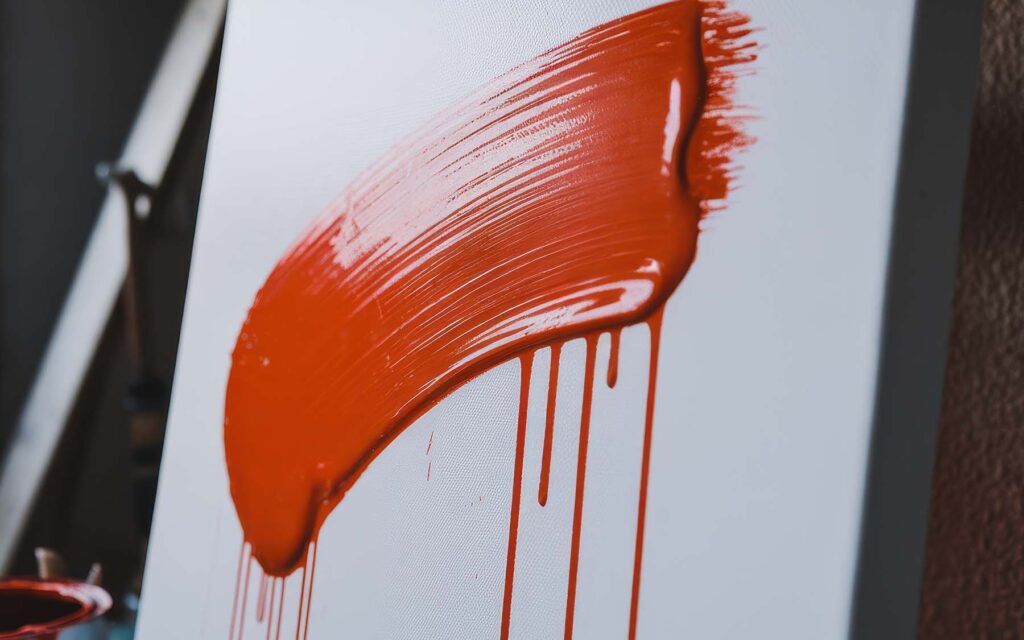
Acrylic paint drying affects both the handling and long-term stability of artists’ work. This article reviews the 2021 study “Role of Environmental Conditions on Drying of Paint” by Aggarwal, Dutta, and Dutta, which systematically evaluated how environmental factors—humidity, lighting, substrate roughness, and color—affect acrylic paint drying and acrylic paint drying time in household acrylic paints (Aggarwal, Dutta, and Dutta 2021). While the work was framed for industrial coatings, the results reveal several lessons on acrylic paint drying conditions that are directly applicable to artists’ studios using waterborne paints.
Overview of the Acrylic Paint Drying Study
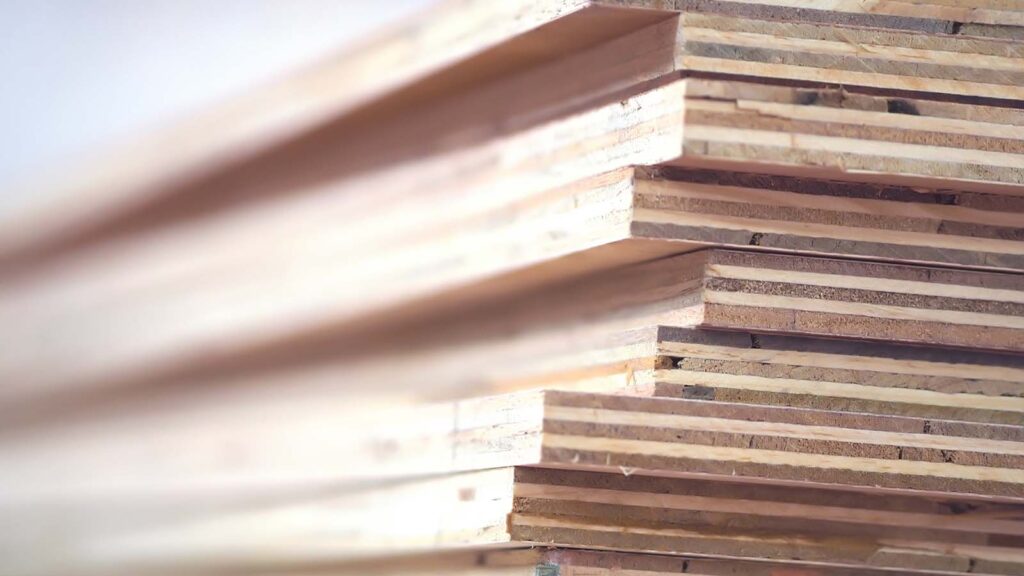
The researchers conducted sixty experiments using blue, red, yellow, and white acrylic paints applied to metal, canvas, and wood substrates. Each painted sample was weighed at intervals to determine weight loss as a measure of solvent evaporation. The tests were performed under ambient, white, and ultraviolet (UV) light at two humidity levels (31% and 43%) and a constant room temperature of approximately 20–24 °C (Aggarwal, Dutta, and Dutta 2021, 2–3).
They divided the drying process into four sequential stages: settling, squashing, inversion, and diffusion. Most solvent loss occurred during the second, or “squashing,” stage, where weight declined rapidly before plateauing as the paint approached its cured state (Aggarwal, Dutta, and Dutta 2021, 1–3).
Study Results of Acrylic Paint Drying Behavior
The data demonstrated exponential weight-loss curves, with roughly 80% of total solvent evaporation occurring within the first 100 minutes (Aggarwal, Dutta, and Dutta 2021, 3). Substrate roughness had a measurable impact: the smooth metal plate (average roughness 0.56 µm) allowed the fastest drying, followed by canvas (26.79 µm) and wood (34.17 µm). Paint films on wood, the roughest substrate, showed the slowest drying rates across the tested colors (Aggarwal, Dutta, and Dutta 2021, 3–4).
Color and light also played roles. White paint dried significantly more slowly under visible and ambient light than under UV radiation (Aggarwal, Dutta, and Dutta 2021, 4). The authors attributed this to titanium dioxide’s high reflectivity—reported in other sources as up to 92% of incident light—which reduces heat absorption and may slow evaporation (Aggarwal, Dutta, and Dutta 2021, 5). Blue, red, and yellow paints dried at comparable rates despite differences in optical wavelength, suggesting that pigment composition rather than light absorption dominates evaporation rate.
Humidity behaved unexpectedly. Under higher humidity (43%), samples dried slightly faster than under low humidity (31%). The authors traced this to the closed paint booth limiting airflow during low-humidity trials, showing that air circulation can dominate over ambient humidity in influencing drying rate (Aggarwal, Dutta, and Dutta 2021, 4–5).




Responses