How to prepare gesso grounds and chalk grounds

Gesso Grounds and Chalk Grounds: Structure, Preparation, and Practice

Introduction to Gesso Grounds

The foundational layers of a painting have a lasting impact on its visual quality and physical durability. In traditional painting practice, gesso grounds and chalk grounds served as the essential surfaces onto which artists applied their images. These grounds were crafted with careful attention to the support, the intended medium, and the desired optical effects. This article, based on “The Grounds in Pictures” by Philip Hendy and A. S. Lucas (1968), provides an in-depth exploration of historical gesso grounds and chalk ground preparations. It offers practical insight for artists interested in replicating or understanding traditional waterborne grounds.

This is Part One of a two-part series. Part Two will focus on oil-bound grounds and their increasing use from the 16th century onward.

Traditional Gesso Grounds: Composition and Purpose

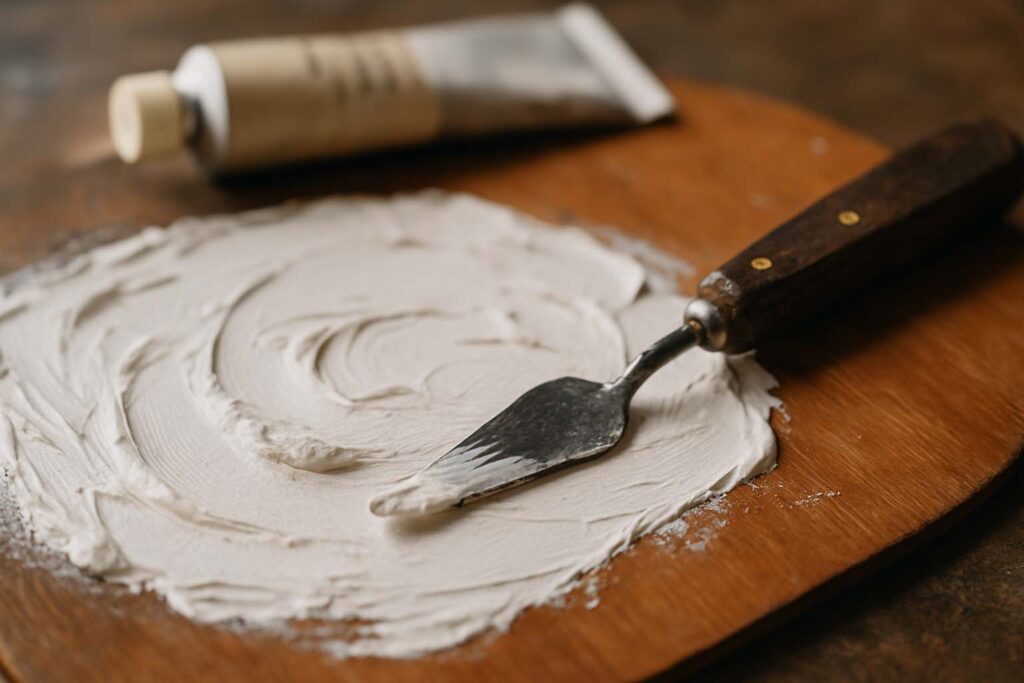
Historically, gesso referred to a mixture of gypsum (calcium sulfate dihydrate) and animal glue. It was primarily used on rigid supports, such as wooden panels, especially in Italy from the 13th to the 16th centuries. Two distinct types of gesso were employed:

  • Gesso grosso: A coarse ground made from a mix of plaster of Paris (semi-hydrate) and anhydrous calcium sulfate. It created a firm, stable base.
  • Gesso sottile: A finer ground consisting of fully hydrated calcium sulfate (gypsum) and glue layered over the gesso grosso to provide a smooth, polishable surface.

The purpose of these layers was not simply to prepare the support. They also influenced the paint’s luminosity, absorbency, and physical behavior. Gesso sottile was especially prized for gilding and egg tempera, where burnishing and fine detail were essential.

Preparing the Glue and Gesso Grounds

In Italian workshops, gesso preparation followed a well-defined sequence:

  1. Glue Solution: Begin with 3 parts dry glue to 17 parts water by weight. Use rabbit skin glue or parchment glue. Soak overnight, then warm gently to about 45°C (just above body temperature).
  2. Absorbing the Plaster: Sprinkle dry plaster of Paris onto the warm glue. The powder will sink until saturation is reached. When it floats, stop. This technique ensures the right balance between glue and filler.
  3. Heating and Application: Heat the mixture gently in a double boiler until it is fluid. Do not stir while adding the plaster; this prevents air bubbles from forming, which can cause surface pits. Apply the mixture warm with a brush or spatula.
  4. Layering: First, apply gesso grosso in multiple coats. Once dry, apply two or more coats of gesso sottile, refining the surface after each layer.
  5. Finishing: The dried gesso can be scraped, polished, incised, or used in raised relief (pastiglia).

Applying Gesso Grounds: Best Practices

The support must be sealed before applying gesso. A size layer of dilute glue prevents excessive absorption and improves adhesion.

Want to read the full article and unlock all resources? Choose an option below:

Already a member? Log in to continue Try 7 days free — $0
Cancel anytime · 30-day money-back guarantee
Related Articles

Responses

Your email address will not be published. Required fields are marked *


Subscribe to Our Newsletter

To begin reading the content, join thousands of artists enjoying our articles. Subscribe to receive updates on artists materials and practices.

Or Join as Member for More Benefits