Fat over lean as basic rule of oil painting

Fat Over Lean—A Basic Rule in Painting

This rule appears to confuse so many artists or ignored completely by others. Perhaps a better way to express the rule “always paint fat on lean” is always paint a slower drying paint film over a faster drying film. Think in terms of the last applied paint film being more flexible than the paint film underneath. Another way to clarify this rule is to think of adding a little more oil in the last application of paint than was included in the paint layer just covered, or not to dilute with solvent the last applied layer anymore than the previous one was thinned.

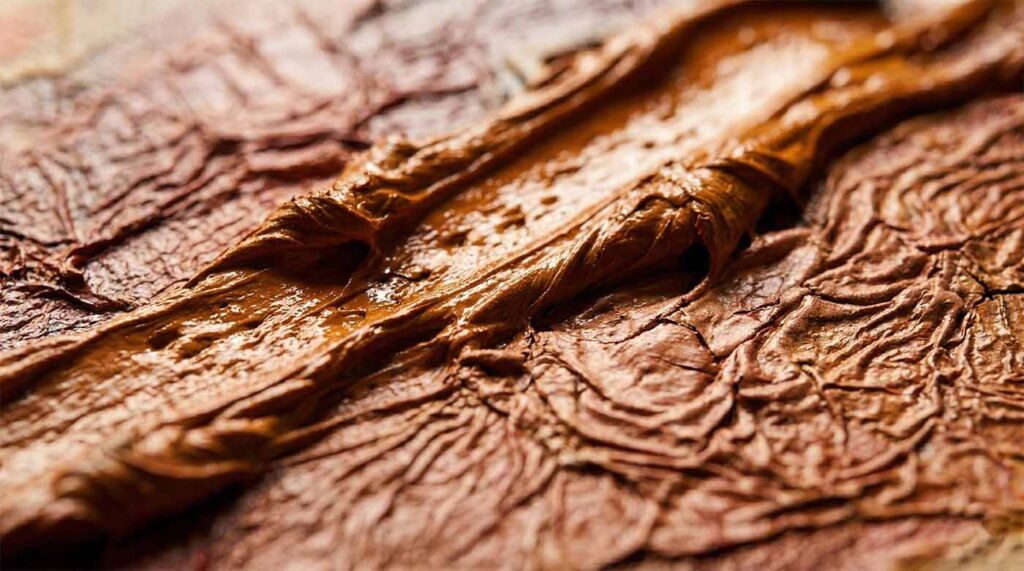
Drying cracks and “alligatoring” is a direct result of breaking this rule. To help us understand why this occurs, A. P. Laurie in The Painters Methods and Materials (1926) describes the process of the drying of linseed oil as follows: “During this process the oil film is not only absorbing oxygen and therefore increasing in weight, but is also losing certain volatile products of the oxidation, thus losing weight. If a thin film of the oil is painted out on glass and weighed from time to time, it will be found to increase in weight in passing from liquid to sticky, and then from sticky to surface dry. It now begins to lose in weight, the rate of loss slowly diminishing.” An increase or decrease in weight of the paint film, represents an equivalent change in the dimension of the paint film. If the changes in dimension of the under layer are considerably greater than the top layer, it is inevitable that the top layer will become disfigured as a result.

Why is it important to avoid diluting the last applied layer of paint more than the previous one?

Diluting the last layer more than the previous can create uneven drying and flexibility, increasing the risk of cracking and surface deformations such as alligatoring.

What does the increase in weight during the drying process indicate about the paint film?

An increase in weight during drying indicates that the oil film is absorbing oxygen and expanding, which can lead to dimensional changes affecting the integrity of the paint layer.

Can you explain the process of linseed oil drying and its impact on paint film stability?

Linseed oil absorbs oxygen and loses volatile products during drying, which causes weight and dimension changes in the paint film; if the underlying layer changes more than the top, it leads to deformations like cracks.

Want to read the full article and unlock all resources? Choose an option below:

Already a member? Log in to continue Try 7 days free — $0
Cancel anytime · 30-day money-back guarantee

Related Articles

Responses

Your email address will not be published. Required fields are marked *


Subscribe to Our Newsletter

To begin reading the content, join thousands of artists enjoying our articles. Subscribe to receive updates on artists materials and practices.

Or Join as Member for More Benefits