Throughout the history of painting, artists have consistently sought ways to enhance their materials for durability, color retention, and drying efficiency. One of the methods that has transcended centuries is the use of oils—both fixed and essential—mixed with pigments to create oil paints. These oils serve as a medium to bind the pigments, ensuring a smooth application, a consistent finish, and a protective layer. However, scientific studies on the effects of essential oils, in particular, are still emerging. This article provides a detailed review of recent studies on essential oils in oil paints, with a focus on their impact on drying times, color retention, and practical applications for artists.
Essential Oils in Art: A Historical Perspective
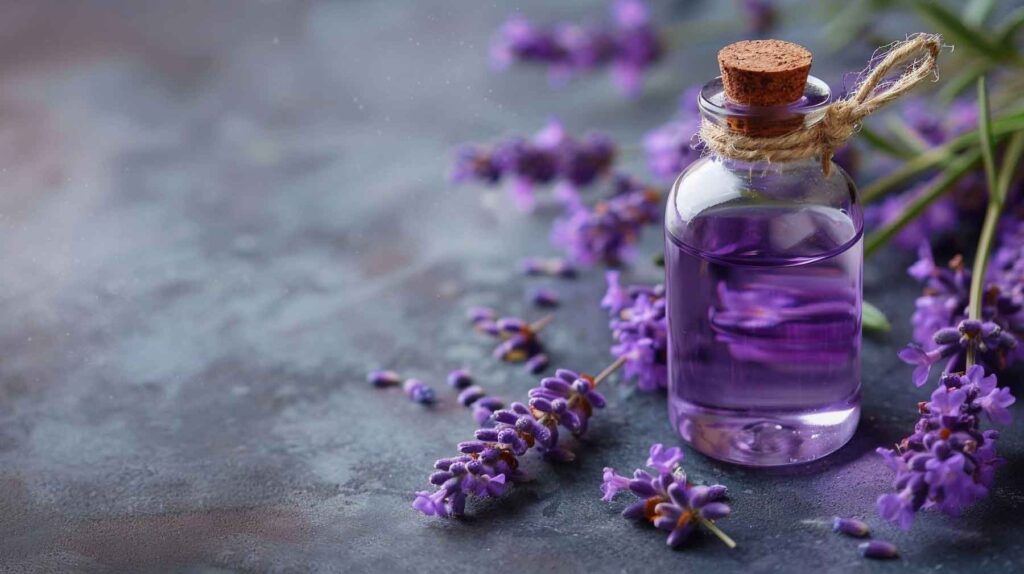
For centuries, essential oils have been part of the artist’s toolkit, although their use has been less documented than traditional drying oils like linseed and walnut oil. Essential oils such as lavender, thyme, clove, and pine turpentine have historically been used for their aromatic properties and their ability to thin oil paint without leaving harmful residues. Pine turpentine, in particular, has been a staple for its ability to thin paint and increase workability. However, concerns about its health effects due to prolonged inhalation have led many artists to seek alternatives such as lavender or clove oils.
Modern Studies on Essential Oils as Paint Mediums
Recent research has provided valuable insights into how different essential oils affect the performance of oil paints as a medium. The study specifically tested four essential oils—lavender, thyme, clove, and pine turpentine—using Royal-Talens Van Gogh brand oil paints. The pigments selected for the tests were:
- White (105): Titanium white
- Yellow (267): Cadmium yellow
- Red (314): Cadmium red
- Blue (534): Ultramarine blue
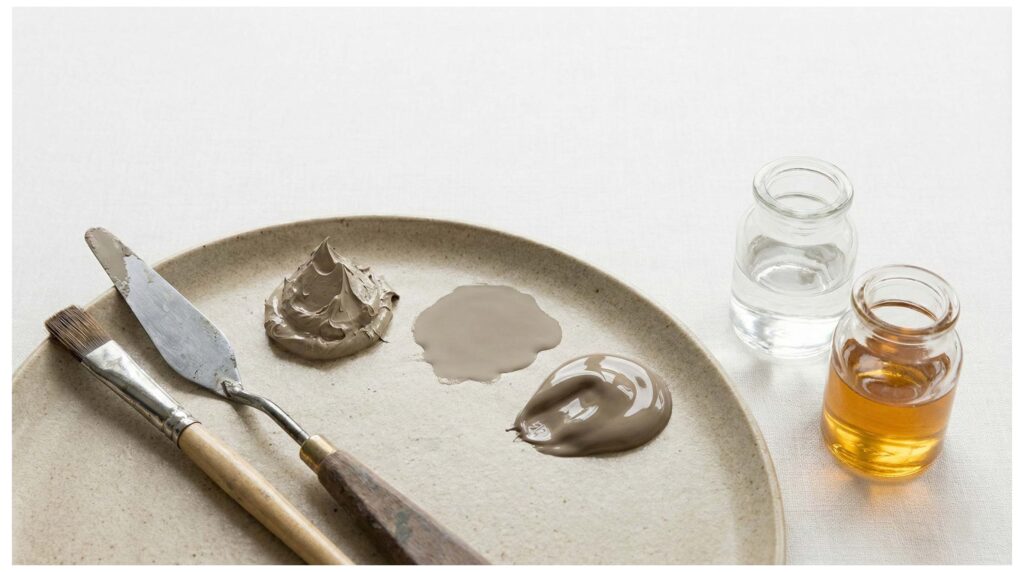
The essential oils were mixed with these paints in a ratio of 1:10 (oil to paint), ensuring uniform consistency. The mixtures were applied to the canvas in equal-sized 1 cm squares, ensuring a consistent paint application. The drying times of the paints were monitored visually each day, and color properties were measured after the paint dried. The aim was to see how different oils influenced drying time, color retention, and lightness of the paint mixtures.
This setup provides artists with valuable data, but it’s important to note that the findings may differ if using different paint brands, as pigment and binder composition can vary. Additionally, essential oil quality and concentration variations can further influence the results. For example, lower-grade oils may contain impurities that could impact color or drying time. Therefore, while the study offers a clear framework for how these oils interact with Van Gogh oil paints, artists using different brands of paints like Old Holland or Williamsburg may experience different results.
Understanding the CIE Lab* Color Model
The study used the CIE Lab color model* to measure the color properties of the paint mixtures, providing a more scientific and objective way to compare colors. But what exactly is the CIE Lab* model, and why is it useful?





Responses