
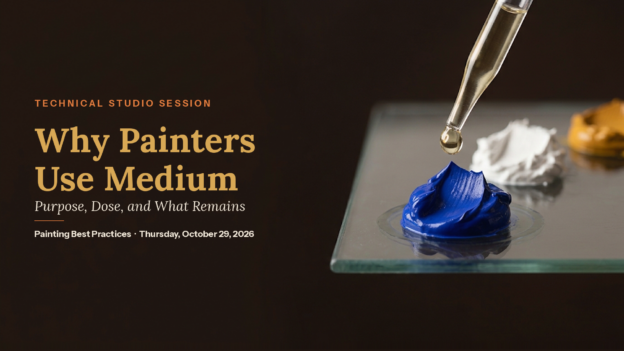
Why Painters Use Medium: Purpose, Dose, and What Remains
Technical Studio Session · October 29, 2026
When considering an oil painting medium, painters usually weigh category, reputation, a teacher’s recipe, or an association with a particular artist. A more useful starting point is the job the paint must perform.
Does it need to move more readily, draw into a longer stroke? Should it retain a peak, become more transparent, level more smoothly, or set more quickly?
Tube oil paint is already a finished formulation of pigment, binder, and other formulation choices.
However, adding the oil painting medium can solve a practical problem, but it also reformulates the paint.
The addition may change resistance, draw, leveling, brush release, and transparency. It can also affect color concentration, drying behavior, and the balance of materials that remain in the paint film.
This Technical Studio Session explains why painters use the oil painting medium. It also offers a controlled studio comparison of refined linseed oil, bodied linseed oil, an oil gel. Moreover, the document outlines practical considerations for selecting paints and varnishes.
The objective is to help painters answer the practical question, which medium should I use? To assist decisions, the session identifies the required change and compares the trade-offs of available tools. Additionally, it highlights how different media affect drying times and compatibility with brushes.
This session examines the topic.
- Why painters add medium and why one painter may have several purposes
- The difference between stiff, soft, long, ropy, and short paint
- Why the base paint affects the result of every medium addition
- How a medium reformulates paint that was already complete
- Why category names do not reveal a product’s full composition
- The different jobs performed by oils, gels, pastes, alkyds, and solvents
- A controlled comparison using one paint and a 20% addition by original paint mass
- What palette-knife tamping and matched brushstrokes reveal about handling
- Resistance, draw, peak retention, leveling, spread, and color concentration
- Why the amount used often matters more than the category name in fat-over-lean decisions
- Why a medium can support handling conditions but cannot supply another painter’s style
- How to evaluate inherited recipes and painting-wide medium practices
- Why combining materials with opposing purposes creates a new formulation
- When a local paint problem calls for a local modification
- What may evaporate, what remains, and what continues to react after application
- Safe handling of solvents, solvent-containing mediums, and drying-oil-soaked materials
Recorded live October 29, 2026. Members have access to the session recording, a six-page studio handout, and the Painting Best Practices community for follow-up questions.
$35 · Free to Artisan members
Course Content
Course Includes
- 1 Lesson