
Painting Best Practices webinar is based on the successful Painting Best Practices workshop developed by Natural Pigments and taught to hundreds of painters worldwide. The webinar provides skills taught in the workshop in a convenient and affordable format. The webinar extends the information in the workshop by giving artists opportunities to learn advanced skills through video courses available on this website.
For over a hundred years, most causes of paint failures have been studied: humidity, temperature, and paint embrittlement. The symptoms were obvious—cracking, delaminating, and paint loss—but the causes were not. Conservation workers gradually formed concepts about the causes of cracking and paint loss of old paintings. Concurrently, the coatings industry studied failures in all types of paint films. Artists developed their own ideas but remained largely unaware of findings from both the conservation community and the coatings industry.
Natural Pigments spent years preparing a workshop to teach skills that are not taught in art schools and universities. We provide an understanding of artist’s materials and tools, what they are designed to do, and how to provide longevity to your finished work. This workshop covers the most important aspects of painting that have proven to be the best practices over the centuries.
Read more about the Painting Best Practices Workshop
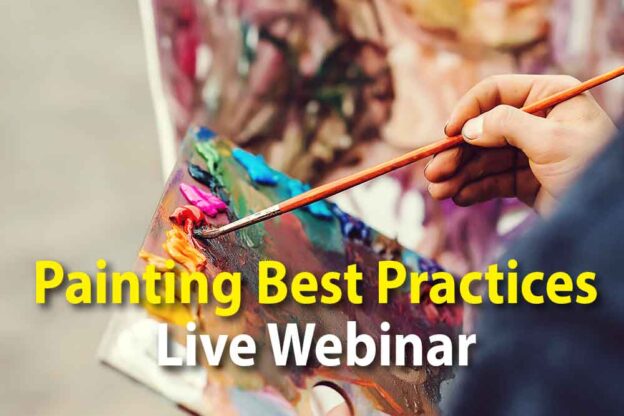
After teaching the workshop to hundreds of students worldwide, we created a webinar featuring all of the information from the workshop. The webinar includes all aspects of constructing a painting, from the support and ground to the final layers. We explain practical procedures and demonstrate how to build your paintings based on conservation research. This webinar is designed for painters of all mediums but with a special emphasis on oil painting.
Enroll in the Painting Best Practices Webinar today to enjoy the special features of this recording of the live webinar where instructors and fellow artists interact.
Webinar with Demonstrations
The webinar begins with a review of the leading causes of cracking and paint loss in paintings. In view of the research, we review different types of painting supports to help you choose the best one for your technique. What are the most suitable grounds for each type of support? What factors influence the embrittlement of the paint film, and what artists can do to prolong its life? You receive clear recommendations of supports, grounds, and painting techniques that help you make technically sound paintings.
The webinar is structured into six lessons. Each lesson is three hours long, followed by one hour of questions and answer sessions by participants of the live webinar recorded in 2022. The paint-making lesson is a demonstration you can follow in your studio.
Advantages and Features of the Webinar
- In contrast to the workshop, attending the webinar saves time and money. There are no added costs of lodging, meals, and transportation—not to mention days away from your studio or job.
- Each online lesson is available to learners for one year after enrollment.
- You will receive a detailed outline after enrollment.
- You can submit questions to instructors if you are having difficulty with the topic.
- The webinar includes over 18 hours of instruction and 6 hours of question-and-answer sessions with the instructors of the webinar.
- After enrollment, you can access monthly Zoom meetings with the webinar instructors.
- Online quizzes help you measure your progress toward learning the concepts presented in the webinar.
- A certificate of completion will be awarded upon successful completion of lessons and quizzes.
Lesson 1: Introduction and Supports
Why Paintings Fail
We introduce the webinar by explaining the leading causes of painting failures as they are understood today by conservation scientists. This introduction provides the background by which we develop the entire webinar.
Which Support is Best for Your Artwork
We cover the foundation of all paintings are supports. Fabric, wood, metal, glass, and plastic— all been used at one time or another as supports for paintings. We examine the most popular supports today and the advantages and disadvantages of each support type.
Rigid Supports—Wood, Metal and Plastic
In our review of how wood panels of historical methods, we examine the methods employed to prevent warping. We next examine man-made wood panels, such as fiberboard and plywood, and separate the myth from reality. The proper method of preparing wood panels, the most effective use of braces, and why common methods do more harm than good.
In recent years, interest in copper as a support for painting has rekindled among artists. We introduce you to its advantages and show you how to properly prepare copper panels for painting. You will also learn about aluminum composite materials (ACM), such as Dibond. We discuss how to prepare ACM panels for painting directly on them and how to adhere to canvas to them.
Flexible Supports—Stretched Canvas
Since the sixteenth century, stretched canvas supports have enjoyed immense popularity. They are also a major cause of cracking in paintings. You will learn the advantages and disadvantages of stretched fabrics—linen, cotton, and polyester canvas. We examine the auxiliary supports for stretched canvas—strainers and stretchers—constructed of wood, metal, or plastic. It may surprise you to learn how keys—wedges in the corners of the stretchers for expansion—do more harm than good.
Next, we teach you how to produce perfectly aligned canvases, regardless of size. The benefits of stretching canvas before attaching it to auxiliary supports. We demonstrate a technique for stretching the perfect canvas, creating even tension across the entire surface. We examine the advantages and disadvantages of staples versus tacks and which types to use and to avoid.
Protective Backings
Finally, we discuss the most important addition to stretched canvas. Backing boards protect the back of canvas from moisture, dirt, pests, and damage often caused during transport and handling.
Lesson 2: Preparing the Support for Paint: Sizes and Grounds
In this lesson, you learn how to apply size and grounds to canvas and panels the right way. We show how to apply traditional size and discuss the advantages of modern alternatives, such as PVA and acrylic dispersions.
After careful preparation of the support, you are ready to learn how to apply the ground. We examine traditional gesso, acrylic, and oil grounds. You will learn which ground provides a solid and lasting foundation for your painting. We examine the different grounds and how they affect the longevity of your finished painting.
Lesson 3: What is Paint—Part 1
In part one of What is Paint, we focus on the basics of paints. The discussion includes the different components of artists’ paints, from the binder and vehicle to pigments and additives. We examine the mechanism of paint drying for waterborne and oil paint. What are the properties of drying oils, such as linseed, walnut, poppy, and safflower oil? How their properties affect the behavior of paint. We show you the drying times of oil paint. You will learn what the confusing “fat-over-lean” principle really means. How it is more flexible in use than most would suppose, and how they relate to oil painting mediums. You will understand it well enough to know how to use it in your painting.
Pigments
What pigment interactions are beneficial in paint mixtures, and which ones are not? In this lesson, we present hundreds of years of observations by the old masters. What current conservation studies show us about pigment mixtures. How to avoid adverse reactions and interactions that cause fading, browning, or darkening paint.
We next discuss common pigment types, such as inorganic, organic, natural, and synthetic pigments, used in painting. You’ll learn all about pigments so you understand their makeup, origin, and modern sources. You will learn about the lightfastness, compatibility, and durability of pigments, their interactions, drying, and aging in different mediums.
Understanding Art Materials Labeling
In this topic, we discuss existing standards for paints and artists’ materials and what they mean for you, the artist. What is the current lightfastness of pigments, and do they apply to the same pigment across different paint brands? Why is one pigment lightfast in oil and acrylic paint but not in watercolors or pastels? Why is it important for artists to be aware of the ingredients in paint? What do the different codes and terms on the labels signify, such as PR 102 or Pigment Red 102? We dispel the many myths surrounding artists’ materials. Arm you with the information you need to make informed choices about paint and artists’ materials. You learn how to perform a lightfastness test in your own studio. Your use and application of paint affect its lightfastness.
Lesson 4: What is Paint—Part 2
Optical and Physical Properties of Paint
We examine the four aspects of light and optics on a paint film: reflection, refraction, absorption, and diffraction. You’ll learn why varnishes change the appearance of paint, why titanium dioxide makes colors appear chalky in mixtures, why oil colors become more transparent with age, and why manufacturers add zinc oxide to many commercial oil colors.
Paint Ingredients and Their Effect on Paint Behavior and Appearance
We correct much misinformation about solvents and the confusion created by trade names, such as Turpenoid. We discuss common diluents, such as gum turpentine (and the terms “triple distilled”, “rectified,” etc.), mineral spirits, and spike oil. This is the time when you will learn what their uses are and when to take advantage of them.
The lesson examines various additives that slow or speed up drying, such as metal driers (cobalt, lead, zirconium, and calcium). We solve the puzzle about the use of mediums. How synthetic and natural resins, such as alkyds, dammar, mastic, copal, Venice turpentine, and Canada balsam, differ, how they are used to produce special effects in paint, and the advantages and disadvantages.
What is the proper technique of “oiling out” and painting into a “wet cushion,” as an aid to unifying color between paint layers? We explain the technique and provide the answers.
Lesson 5: Paint Making
We demonstrate how to make your own paint using oil, pigment, and extenders that can aid in handling. You will have the opportunity to prepare oil paint. This is a skill that every artist should master. We also discuss the properties of synthetic and natural resins in commercial oil painting mediums, and the advantages and disadvantages.
In this lesson, we demonstrate how to make both waterborne and oil paint. Follow along by making your own paint with the optional materials kit from Natural Pigments, which is available through this website. We will make several colors, explore the use of extender pigments, and use four different oils to make oil paint. We also demonstrate how to make waterborne paint, such as egg tempera and watercolor.
Lesson 6: Varnishes, Brushes and Your Health
Selecting the Right Varnish for Your Painting
A varnish can serve several functions, technical as well as purely visual. We help you decide how and when to apply varnish to a picture after careful consideration of many factors. We will help you decide about varnishing, such as type, method of application, and desired final appearance. Next, we demonstrate how to properly apply a varnish and avoid defects commonly found in its appearance.
All About Brushes
The lesson also examines the typical anatomy of an artist’s brush. We show the many different natural and synthetic hairs used in today’s brushes and how each type provides different sensations and effects in the hands of artists. The names for hair used by manufacturers are often confusing and sometimes even misleading. We identify what each name typically denotes, such as Kolinsky and Sable, and help you to identify them. Besides the quality of the hair, the construction of the brush determines much of its quality and service life. You learn how the process of making brushes. What are the criteria you need to evaluate brushes before you purchase them?
Studio Safety and Hygiene
We discuss studio safety to help artists achieve a clean and safe working environment that promotes health and safety. We focus on properly disposing of artists’ materials, protective gear, and clothing for different studio tasks. What is adequate studio ventilation? Procedures to help you avoid contaminating living areas. What are inexpensive and easy testing methods for heavy metals on work surfaces, floors, and tools?
Instructors
George O’Hanlon is the technical director of Natural Pigments and executive director of Iconofile, a nonprofit educational organization that promotes understanding of sacred art. George received his fine arts education and apprenticeship in Mexico. Upon return to the United States, he worked as a creative director for advertising agencies in Silicon Valley, working on such major accounts as Sony, Hewlett-Packard, and Ricoh. He founded an agency later acquired by the chemical giant Shin-Etsu. There, he served as vice president of U.S. marketing. In 1992, he studied traditional art techniques abroad. Then, in 2001, I co-founded Iconofile and Natural Pigments to promote an understanding of these practices. Since that time, he has formulated hundreds of artists’ paints and materials, including Ceracolors, a waterborne wax paint.
Tatiana Zaytseva is the administrative director of Natural Pigments and secretary of Iconofile, a nonprofit educational organization dedicated to promoting the understanding of sacred art. Tatiana received her education in Saint Petersburg, Russia in fashion and design and a second degree in engineering process controls. After moving to the U.S. in 2001, she helped to establish Iconofile and later Natural Pigments in 2003.
Enrollment Price
The Painting Best Practices Webinar is only $650 for over 18 hours of instruction, 6 hours of question and answer sessions, and 500 points in the Friends Rewards Program* by Natural Pigments.
You will have access to the recorded webinar for one year from the date of enrollment.
*Rewards points are awarded after completion of the Painting Best Practices Webinar.
You must log in and have started this course to submit a review.
Course Content
Course Includes
- 6 Lessons
- 7 Quizzes
- Course Certificate