
Live Technical Studio Session
Glazing Like the Old Masters: What Conservation Science Actually Tells Us
If your glazes look dull, sink in, or fail over time—this is why
A live Technical Studio Session with George O’Hanlon.
Glazing is often taught as a simple technique—thin transparent layers over opaque paint.
That explanation leaves out what actually matters.
This session explains glazing as a material system: how it works, why it fails, and what decisions control the result.
Live Technical Studio Session
Thursday, May 28, 2026
10:00 AM Pacific Time
Session Format
This Technical Studio Session is structured to combine focused teaching with practical problem solving:
- 45 minutes — Core presentation
- 15 minutes — Studio Problem Clinic
- 30 minutes — Open Questions & Answers
Seats are limited to keep the session interactive.
Join live to ask questions and get direct guidance.
Replay available only to Artisan members. Technical Studio Sessions are held live each month.

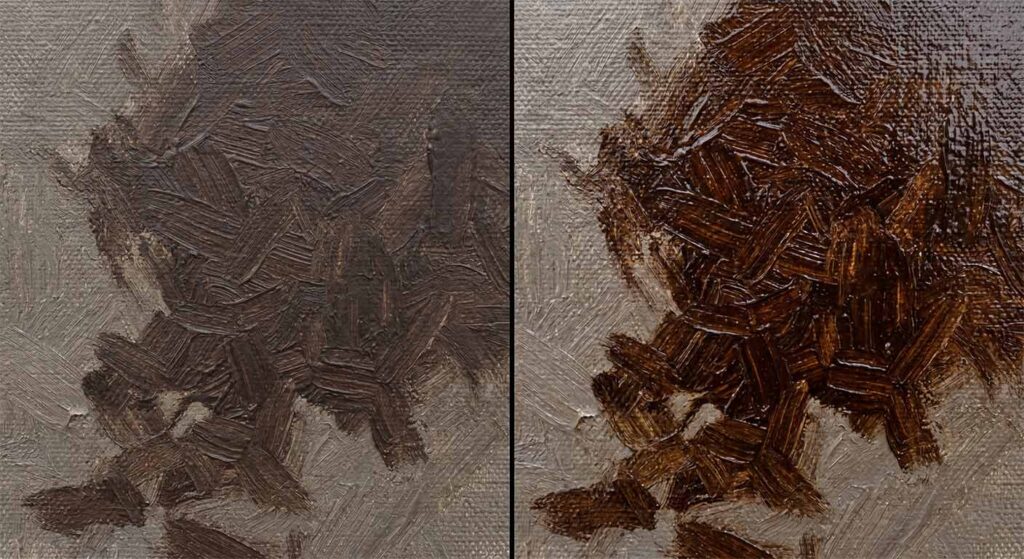
Left: a thin glaze with insufficient binder and poor film formation—color appears flat, desaturated, and matte.
Right: a properly structured glaze—light passes through the layer and returns from the underpainting, producing depth, saturation, and a unified surface.
This is not a difference in pigment or technique. It is a difference in how the paint film is constructed.
This Session Includes:
- The real mechanism of how glazes create depth
- Why modern glazing methods often fail
- How solvents affect binder distribution in paint
- Practical steps you can apply immediately
Replay available to Artisan members only
Why Glazing Fails in Practice
For most artists, glazing is taught without structure.
What’s missing:
- What actually controls transparency
- How underlayers determine results
- Why solvents change paint behavior
Common results include:
- Dull or muddy color
- Sinking-in
- Weak paint films
- Loss of luminosity
These are not random defects. They are predictable outcomes of how paint is constructed.
If Your Glazes Look Right Wet—but Fail Dry—This Session Is For You
- Color loses depth and becomes flat or gray
- Dark glazes dry lighter and less saturated
- Surface gloss disappears unevenly across the painting
- Layers feel thin but still fail to adhere properly
- Repeated glazing does not increase depth—only muddies color
These are not technique problems. They come from how the paint film is constructed.
What You Will Learn
This session explains the material science and historical practice behind stable painting.
What to Change in Your Paint
Why transparency labels are not enough • How to control paint structure in glazes
How Glazing Actually Works
The optical system behind depth and saturation • Why underlayers matter more than pigment choice
Exactly What To Do in Your Studio
How to prepare a surface for glazing • How to build stable glaze layers
Studio Problem Clinic
A new feature of the Technical Studio Sessions is the Studio Problem Clinic.
Members may submit studio problems related to the session topic—such as cracking, sinking-in, or unexpected paint behavior. Selected submissions are reviewed during the session.
The goal is not only to answer questions but also to demonstrate the reasoning behind diagnosing painting problems.
This makes each session both a technical presentation and a practical problem-solving discussion.
We focus on real issues such as:
- Glazes that sink in or lose gloss
- Weak or underbound layers
- Poor adhesion between layers
This is not a generic Q&A—it is a structured diagnostic session. Because these cases come from real studios, the discussion often reveals issues that are rarely covered in books or standard instruction.
Why Attend Live
A live Technical Studio Session gives you more than a recorded lecture.
Get direct guidance on how to adjust your materials—not just theory.
You can see the material presented in sequence, hear the reasoning behind recommendations, and ask questions about your own painting methods during the Q&A.
Ask questions during the session
Follow the argument step by step
Learn from the questions other painters ask
Get direct guidance on your materials
See how glazing problems are diagnosed
Ask questions specific to your work
What Happens During a Technical Studio Session
Each session is structured to allow both focused instruction and discussion. Practical decision-making framework for studio use
45 minutes — Core presentation
A structured explanation of the topic.
15 minutes — Studio Problem Clinic
Selected member submissions are reviewed and discussed.
30 minutes — Open Q&A
Participants may ask questions about their own materials and studio practice.
Technical Studio Sessions Are a Monthly Series for Serious Painters
This session is part of the Technical Studio Sessions series at Painting Best Practices.
Artisan members receive access to live monthly sessions focused on the materials, methods, and long-term behavior of oil painting.
Each session focuses on a specific structural problem and how to correct it in practice.
Live monthly technical sessions
Replay access for members
Growing archive of past sessions
Continuing discussion in the community
Artisan Includes
- Access to this live session
- Replay of this session
- Access to future session replays during active membership
- Ongoing technical education through community discussions
- Priority support
The $1 trial is available only to eligible users and auto-renews unless cancelled.
Start Artisan for $1
14-day trial
Best for artists who want the live session and member replay access.
-
Attend the live session
-
Get the replay afterward
-
Access the Technical Studio Sessions archive
-
Continue with future monthly sessions
Auto-renews to Artisan membership unless cancelled before renewal.
Artisan members may submit studio problems for discussion during the Studio Problem Clinic.
Attend This Session for $10
Best for artists who only want to attend the live event.
Attend the live session
Participate in Q&A
No replay included
Replay is not included with the live-only ticket.
Why This Session Is Also the Gateway to Future Technical Studio Sessions
For many artists, the value is not just one session. It is continuing access to a series focused on real studio problems, historical practice, and materials science.
Members gain access to these sessions as they are released and can participate live each month.
Varnishing Oil Paintings
Why Oil Paint Darkens
Why Oil Paint Cracks
Canvas Preparation and Grounds
Topics subject to scheduling, but the series is designed as an ongoing monthly program.

About George O’Hanlon
Technical Studio Session Presenter
George O’Hanlon is the founder of Natural Pigments and Painting Best Practices. His work focuses on artists’ materials, historical painting methods, and the long-term performance of paintings.
This session draws on practical studio knowledge, technical research, and historical evidence to help artists make more durable decisions in their work.
Frequently Asked Questions
1. What is included in the $1 trial?
The eligible 14-day Artisan trial includes access to the live session and, because replay access is reserved for Artisan, access to the replay during active membership.
2. What does the $10 ticket include?
The $10 ticket includes access to the live session and Q&A only. It does not include the replay.
3. What if I cannot attend live?
The replay is available only to Artisan members. If replay access matters, the Artisan option is the better choice.
4. Are Technical Studio Sessions held regularly?
Yes. Technical Studio Sessions are scheduled live each month as part of the continuing program.
5. Can I cancel the trial?
Yes. The trial auto-renews unless cancelled before renewal.
6. Who is this session for?
Yes. Artisan members may submit questions or images related to the session topic. Selected cases are discussed during the Studio Problem Clinic segment of the session.
Stop Guessing What Your Paint Is Doing
Learn how to control your materials directly—instead of relying on rules that don’t explain the outcome.
Seats are limited to keep the session interactive. Live attendees can ask questions about their own work.