
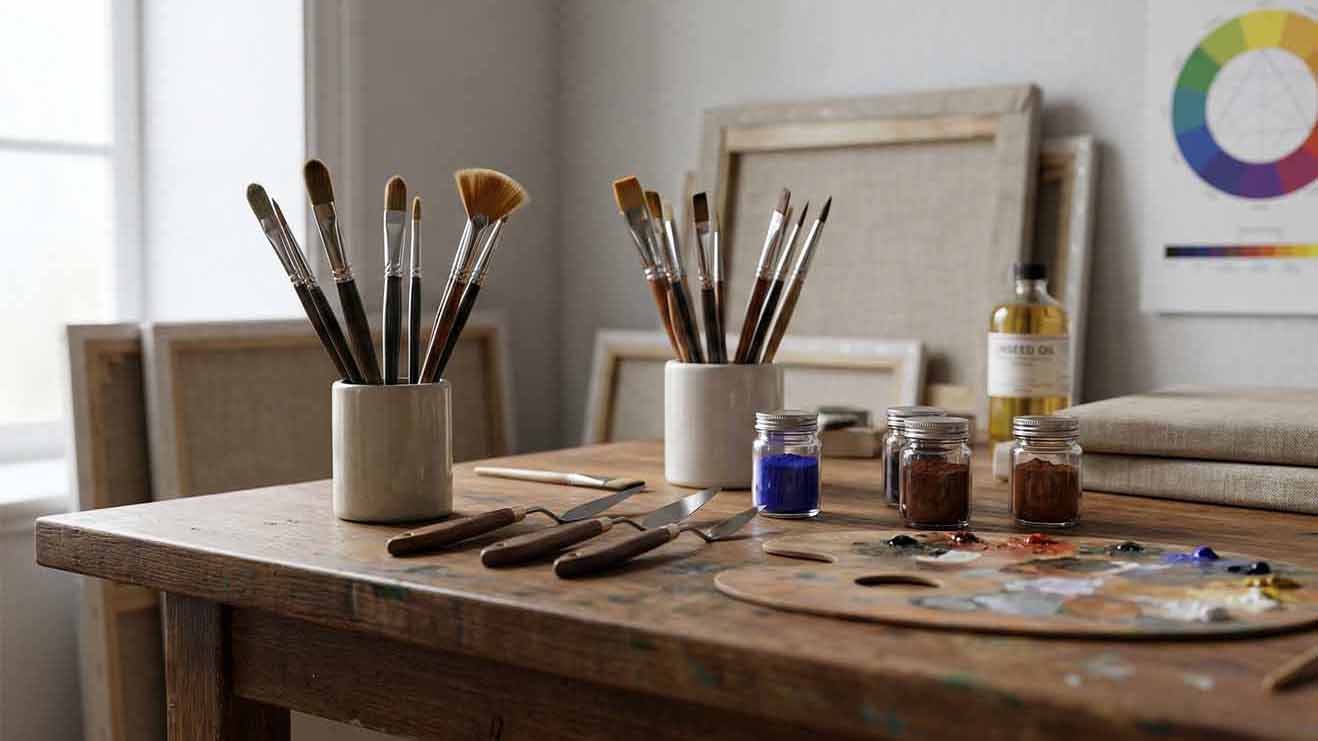
Overview
Glazing is one of the most admired techniques associated with Old Master painting. It can create depth, luminosity, subtle color transitions, and surface effects that are difficult to achieve with opaque paint alone.
It is also one of the most misunderstood.
Many painters have been taught that glazing depends primarily on adding more medium, using a special resin, or following a fixed historical recipe. The evidence from historical paintings tells a more complex story.
This session examines glazing from a technical perspective:
- How glazes control the movement of light
- Why transparency depends on pigment properties, not simply on medium
- How particle size, refractive index, and layer thickness affect optical behavior
- Why surface gloss is essential to the visual effect of a glaze
- How historical painters used glazes in relation to body color and underlayers
- What conservation science reveals about Old Master glazing materials
- How modern pigments can be used to create durable glaze systems
- What practical decisions reduce the risk of weak, slow-drying, or overly soft paint films
Course Content
Not Enrolled
Course Includes
- 1 Lesson

Login
Accessing this course requires a login. Please enter your credentials below!